Public Monitoring of the Integration of Historical Regions
In accordance with the instruction of the President of the Russian Federation, issued following the
meeting of the Head of State with members of the Civic Chamber of the Russian Federation and chairs of
the civic chambers of the constituent entities of the Russian Federation on November 3, 2023, the Civic
Chamber of the Russian Federation continued comprehensive public monitoring of compliance by state
authorities and local self-government bodies with the social rights of citizens during the integration of
the Donetsk People's Republic, the Lugansk People's Republic, the Zaporozhye Oblast, and the Kherson Oblast
into the economic, financial, credit, and legal systems of the Russian Federation, as well as into the
system of state authorities of the Russian Federation.
The collection and analysis of information received by the Civic Chamber of the Russian Federation
revealed both positive practices and key challenges and problematic areas arising in the integration process
that require additional attention from federal and regional state authorities.
The outcomes of this work indicate that the implemented measures have contributed to the formation of a
sustainable mechanism for systematic feedback between civil society and state authorities, ensuring the
openness and transparency of decisions made, and strengthening citizens' trust in state institutions.
The outcomes of the work demonstrate that the implemented initiatives have contributed to establishing a
sustainable mechanism for systemic feedback between civil society and state authorities, ensuring the
openness and transparency of decision-making, and strengthening public trust in state institutions.
Support for Participants of the Special Military Operation
In 2025, support for participants of the Special Military Operation (SMO) and their families remained one of
the key areas of activity for the Civic Chamber.
Thus, in May 2025, a signing ceremony for an agreement was held at the Civic Chamber with the charitable
foundation "Nashi sootechestvenniki" ("Our Compatriots") and the Dr. Dmitriev Revitalization Medical Center
"SanProVi" to implement a pilot project for the rehabilitation, habilitation, and resocialization of persons
discharged from the Armed Forces and other Russian security agencies, veterans of the SMO, and their family
members.
The pilot project is based on the experience of implementing similar initiatives in the Lipetsk, Novosibirsk,
and Chelyabinsk regions, as well as the Krasnodar Territory. The parties agreed to conduct seminars, round
tables, and other events involving representatives of government structures, scientific and educational
institutions, and the media.
Subsequently, in October 2025, as part of the agreement's implementation, a psychological training session
titled "How to Adapt and Maintain Emotional Balance" was held for the wives and mothers of Special Military
Operation participants.
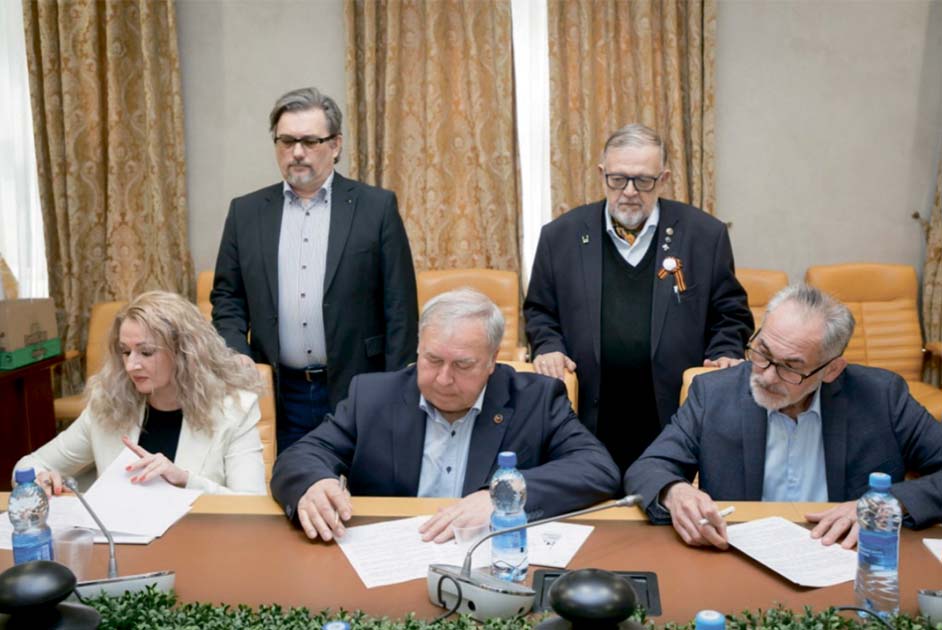 Signing ceremony of the agreement between the Civic Chamber of the Russian Federation, the charitable foundation "Nashi sootechestvenniki," and the revitalization medical center "SanProVi" on the implementation of a pilot project for the rehabilitation, habilitation, and resocialization of persons discharged from the Armed Forces and other security agencies of the Russian Federation, veterans of the Special Military Operation, and their family members. May 2025 / Press Service of the Civic Chamber of the Russian Federation
During the initial stage of engagement with the training participants, specialists assessed the psychological
state of patients who had lost a loved one or were experiencing a pathological fear of such a loss. The
primary objective was to stabilize the emotional state of the project's participants.
In March, the "Za lyubov'" ("For Love") project was launched, aimed at providing comprehensive support to
wives of special military operation participants who are expecting a child or are raising children under the
age of three. The program's implementation includes support measures for discharge from the maternity
hospital, assistance with older children under the "Sotsial'naya nyanya" ("Social Nanny") initiative, as
well as the provision of psychological and moral support. In the future, there are plans to expand the range
of services offered by introducing cleaning services.
Currently, 160 women are participants in the program.
First piloted in the Samara region, the "Za lyubov'" project has demonstrated sustained effectiveness and is
gradually expanding its territorial coverage, now encompassing four additional regions of the Russian Federation.
Continuing the work to support and improve the living conditions of special military operation participants
and their families, the Civic Chamber of the Russian Federation conducted a public review of draft laws
aimed at establishing social support measures for SMO participants and their families.
In particular, the Civic Chamber provided expert opinions following discussions on:
- A draft law amending certain legislative acts of the Russian Federation, which proposed granting
the surviving spouse the right to temporarily use a vehicle owned by a person who died in connection
with participation in the special military operation or in assisting in the execution of its tasks.
- A draft law amending Federal Law No. 5-FZ of January 12, 1995, "On Veterans," which proposes granting
veteran and combat-invalid status to military personnel and other categories of citizens who
participated in repelling the armed incursion and the SMO.
- A draft law simplifying the inheritance procedure for relatives of persons who died in connection with
participation in the SMO, including the possibility of reinstating the deadline upon presentation of an
official document.
- A draft law extending the right to preferential university tuition at the expense of budget funds not
only to children but also to stepsons and stepdaughters who are dependents of SMO participants.
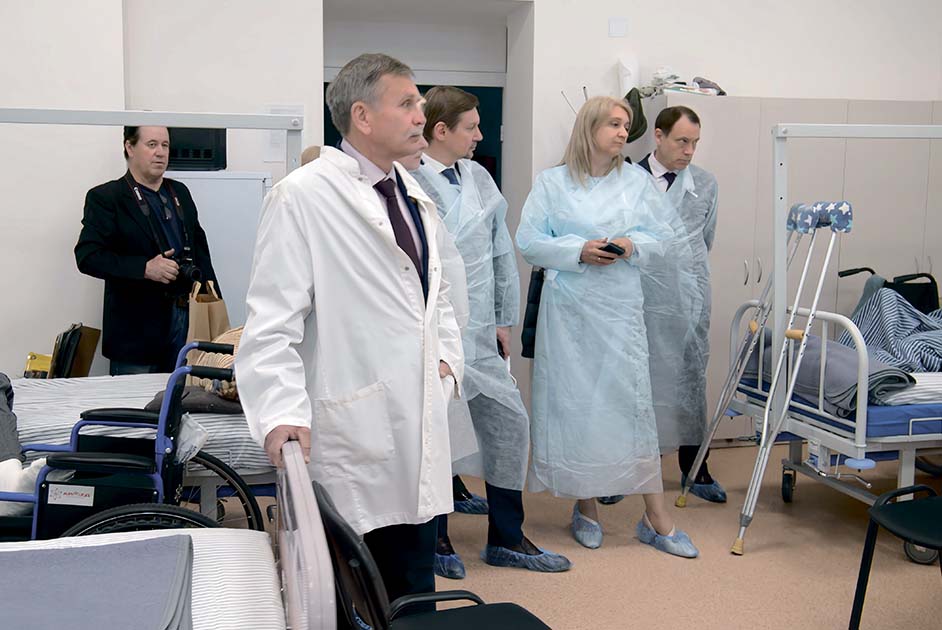 First Vice President of the Civic Chamber of the Russian Federation, Hero of Russia Vyacheslav Bocharov visits a military hospital in Irkutsk during the "Community" forum. May 30, 2024 / Press Service of the Civic Chamber of the Russian Federation
Protecting the Interests of NPOs
In 2025, developing and improving systemic support measures for nonprofit organizations (NPOs) remained among
the Civic Chamber's priority areas. The Civic Chamber served as a platform for discussing draft federal law
No 795117-8 "On Amending the Federal Law 'On Nonprofit Organizations,'" aimed at enabling the
identification and authentication of NPOs' personal pages on social networks via the State Services portal.
This initiative is expected to enhance public protection against social media fraud, increase trust in NPOs,
and boost charitable activity.
In its review, the Civic Chamber highlighted risks that need to be mitigated before the bill's adoption.
Specifically, for small NPOs with limited resources, the identification process could prove complex and
costly. Support mechanisms for such organizations must be considered. It is also crucial to guarantee the
protection of personal data of NPOs and their representatives during authentication. Introducing new
procedures may initially reduce NPOs' operational efficiency; therefore, reasonable deadlines for
implementing the identification and authentication processes should be established.
The Civic Chamber also focused on the issue of NPOs registered at the residential addresses of their heads
being charged as MSW owners. However, the vast majority of NPOs registered at residential premises generate
minimal MSW, not exceeding typical household waste levels. The Civic Chamber proposed developing a
nationwide mechanism to exempt such NPOs, whose activities generate minimal MSW, from entering into
contracts with regional waste operators and paying MSW disposal fees.
Furthermore, to simplify NPO operations, the Civic Chamber appealed to the Russian Ministry of Justice
requesting consideration of extending to NPOs the mechanism that exempts entrepreneurs from liability when
they voluntarily rectify violations.
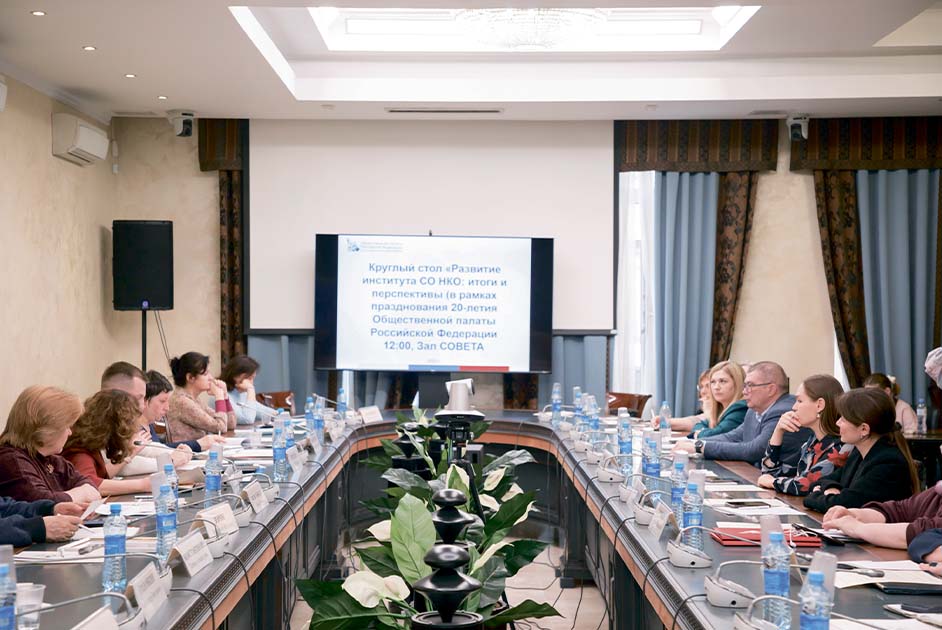 Expert discussion on supporting the development of socially oriented NPOs held at the Civic Chamber of the Russian Federation / Press Service of the Civic Chamber of the Russian Federation
Large-Scale Rotation of Public Supervisory Commission Members
In 2025, another large-scale rotation of members occurred in Public Supervisory Commissions, with updates in
58 regions of the Russian Federation. Following tradition, the recruitment of new PSC members was
preceded by informational-methodological seminars and public events organized by the Civic Chamber.
During the formation of the new PSC compositions, significant attention was paid to preserving and ensuring
the continuity of the accumulated experience in human rights activities of PSC members. This is considered
critically important for their effective exercise of authority, given the specific field of public oversight
in which the Public Supervisory Commissions operate.
Scaling Up Public Oversight
In recent decades, Russia has seen active development in the practice of business
companies publishing public nonfinancial reports on sustainable development.
These documents allow businesses to describe their contributions to improving the population's quality of
life, enhancing their employees' working conditions, implementing environmental protection initiatives, and
more.
To advance the institution of public oversight, the Civic Chamber has launched a tool for public verification
of public nonfinancial reporting.
This tool ensures an objective assessment of the reliability of data provided by companies and offers expert
analysis of the effectiveness of implemented programs.
The Russian Ministry of Economic Development officially recommends that Russian businesses undergo such
independent expert review.
In 2025, four major companies presented their sustainability reports from the previous year for evaluation by
the experts of the Coordinating Council of the Civic Chamber for Environmental Well-being and the
Development of Public Nonfinancial Reporting Practices, authorized by the Civic Chamber's council to act as
a public verifier, and its rating partner, the RAEX agency.
The first companies to demonstrate to the public this much-needed and valuable openness to dialog, as well as
a commitment to ensuring transparency in their activities and improving their work towards achieving
sustainable development goals, were the En+ Group, RUSAL, Polyus, and Renaissance Insurance.
"School of Public Oversight" Project
For the development of the public oversight institution, on May 19, 2025, the "Public Oversight School"
project was launched on the platform of the Civic Chamber, representing a large-scale educational
initiative.
The project's main goal is to form a "personnel" reserve of public inspectors capable of effectively
monitoring the implementation of government decisions. Its objective is to increase the legal literacy of
youth and involve them in the socio-political life of the country.
The organizers were the "Social Sphere" Foundation for the Development of Public Interaction and Social
Communications and the Civic Chamber of the Russian Federation. The initiative's author is Evgeny
Martynov, Deputy Chairman of the Civic Chamber's Commission on Public Oversight and Work with Citizens'
Appeals, and head of the "HealthControl" project.
The theoretical and practical modules of the school are conducted by well-known public and political figures,
lawyers, human rights activists, representatives of the Administration of the President of the Russian Federation,
government bodies, and members of the Civic Chamber.
Thus, the project is a significant step in developing the public oversight system in Russia and confirmation
that active youth are ready not just to observe but to act.
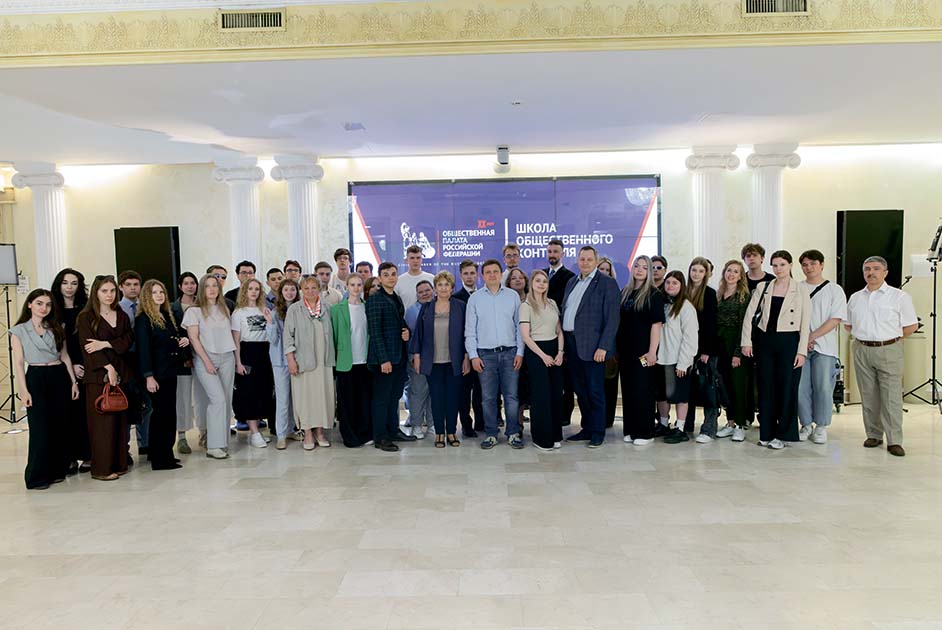 Members of the Civic Chamber of the Russian Federation Evgeny Martynov and Evgeny Masharov with participants of the "Public Oversight School" project at the Civic Chamber of the Russian Federation. May 19, 2025 / Press Service of the Civic Chamber of the Russian Federation
The Civic Chamber as a Platform for Developing Solutions to Prevent Environmental Damage
In early 2025, the Civic Chamber paid special attention to addressing the consequences
of a major environmental disaster and developing systemic measures to protect the natural environment,
dedicating a series of events to this issue.
In December 2024, a severe storm caused a leak and subsequent spill of petroleum products from the tankers
‘Volgoneft-239’ and ‘Volgoneft-212’. As a result, the waters of the Black Sea and beaches in the city of
Anapa and other resort towns were polluted.
Thousands of volunteers from across the country participated in the cleanup efforts. The Civic Chamber's
commissions on volunteerism and on ecology were actively involved in coordinating volunteer assistance.
To address this, a roundtable was held on January 31 titled "Ways to Improve the Efficiency of Petroleum
Product Cleanup Operations at Sea and on Shore, and Measures to Mitigate Impact on Wildlife and the Region's
Recreational Potential." The discussions focused on the technological, organizational, and legal aspects of
emergency response, as well as the role of cooperation between the state, the expert community, and public
organizations in minimizing environmental damage.
Subsequently, on March 5, another roundtable was convened on "Emergency Volunteer Assistance: The Role of
Volunteers in Responding to the Petroleum Product Spill in the Black Sea and Improving the Efficiency of
Organizing Their Work."
This event addressed issues of action coordination, skills enhancement, and safety assurance for volunteers
involved in the cleanup following the accident involving the tankers ‘Volgoneft-212’ and ‘Volgoneft-239’ in
the Kerch Strait on December 15, 2024. Based on the outcomes of these events, a set of recommendations was
formulated. These cover areas such as improving the system of inter-agency cooperation, developing
infrastructure for the long-term rehabilitation of affected ecosystems, and supporting and recognizing
citizens who made significant contributions to mitigating the environmental damage.
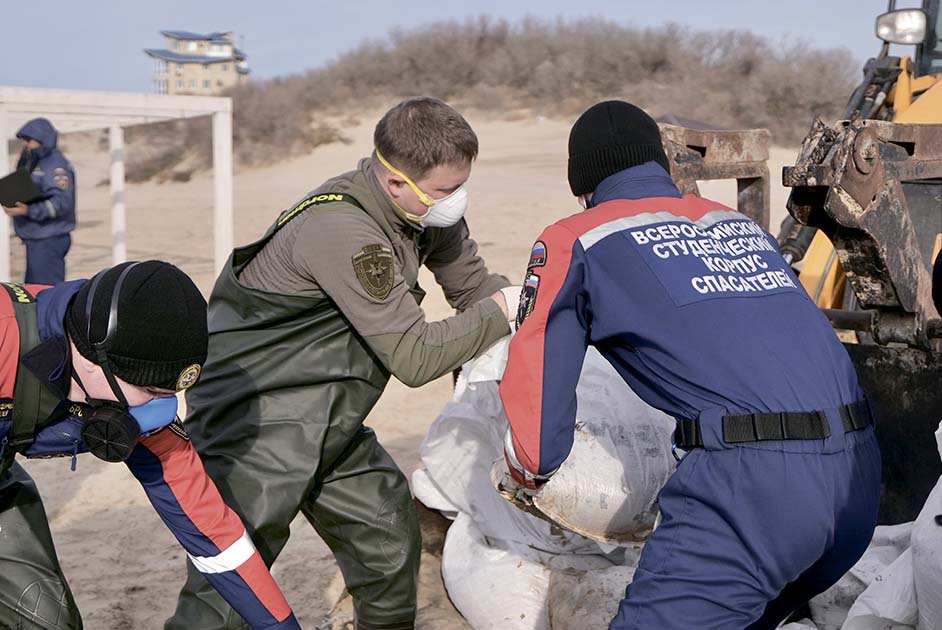 Civic Chamber member Evgeny Kozeyev, head of the All-Russian Public Youth Organization "All-Russian Student Rescue Corps," participates in the cleanup of petroleum product spill consequences on a beach in the Anapa area in 2025. Valeria Semenova / Press Service of the All-Russian Student Rescue Corps
Protecting Citizens Affected by Telephone and Internet Fraud
In 2024–2025, the Civic Chamber saw a sharp increase in appeals from citizens affected by telephone and
internet fraud. In response, members of the Civic Chamber focused not only on educational and preventive
measures, including awareness campaigns highlighting the potential dangers associated with the development
of modern digital technologies, but also on providing direct legal assistance to citizens who have fallen
victim to cybercriminals.
One of the effective practical tools for implementing these tasks has been organizing personal appointments
for citizens affected by telephone and internet fraud, aimed at protecting their violated rights and
providing legal and advisory support.
For instance, during these personal appointments, practical assistance was provided to applicants in
restoring their violated rights. Corresponding inquiries were sent to prosecution authorities, resulting in
procedural decisions to reopen investigations in criminal cases. Simultaneously, legal support was provided
to citizens at the pre-trial stage: claims were prepared and sent to the credit institutions that issued
loans to applicants who had been subjected to fraudulent activities.
This approach to work not only facilitated prompt responses to citizens' pressing problems but also served as
an effective instrument for public oversight and the prevention of cybercrime.
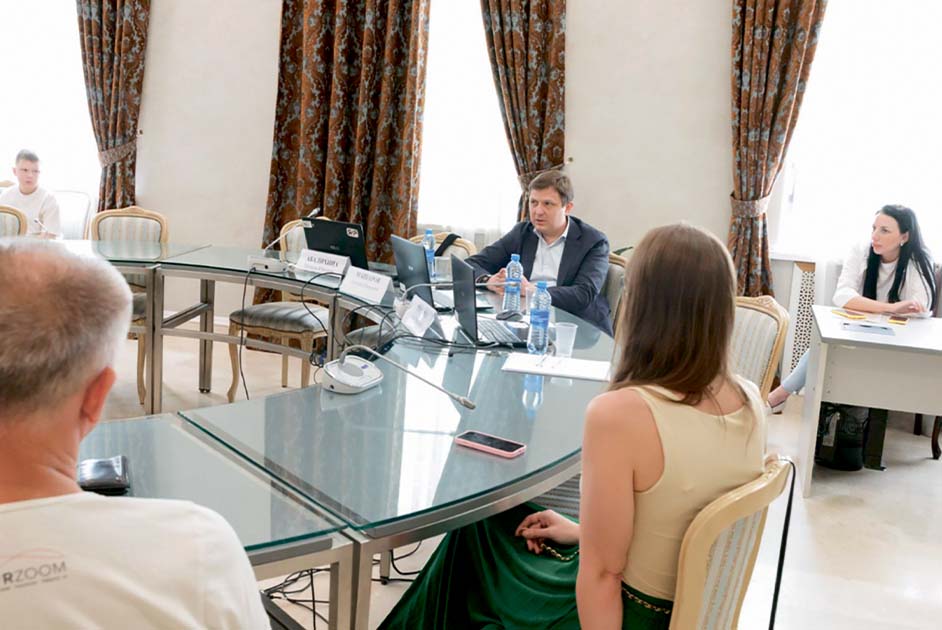 Member of the Civic Chamber of the Russian Federation Evgeny Masharov during a reception for citizens affected by telephone and/or internet fraud. May 27, 2025 / Press Service of the Civic Chamber of the Russian Federation
Supporting Cultural Workers
For several years, the Civic Chamber has consistently advocated for the launch of a new program to help
attract and retain specialists in the cultural sector in small towns and villages, which are home to a third
of our country's population.
The meeting between Civic Chamber members and the President of Russia proved to be a true breakthrough on
this issue: the President of Russia supported the request for the swift launch of the "Zemsky Cultural
Worker" program and the allocation of necessary funds for its implementation.
The program officially commenced on January 1, 2025. Its main goal is to fill nine thousand vacant positions
in the cultural sector across 87 constituent entities of the Russian Federation.
During the final "Community" forum, participants assessed the progress of the "Zemsky Cultural Worker"
program and discussed ways to enhance its effectiveness. It was noted that over 1,000 vacancies are planned
to be filled this year, with 982 cultural workers already having successfully passed the selection process
and secured employment. It was also highlighted that the number of applications received exceeded the
initially planned target. Specifically, while 1,138 applications were anticipated, a total of 1,345
applications were actually submitted.
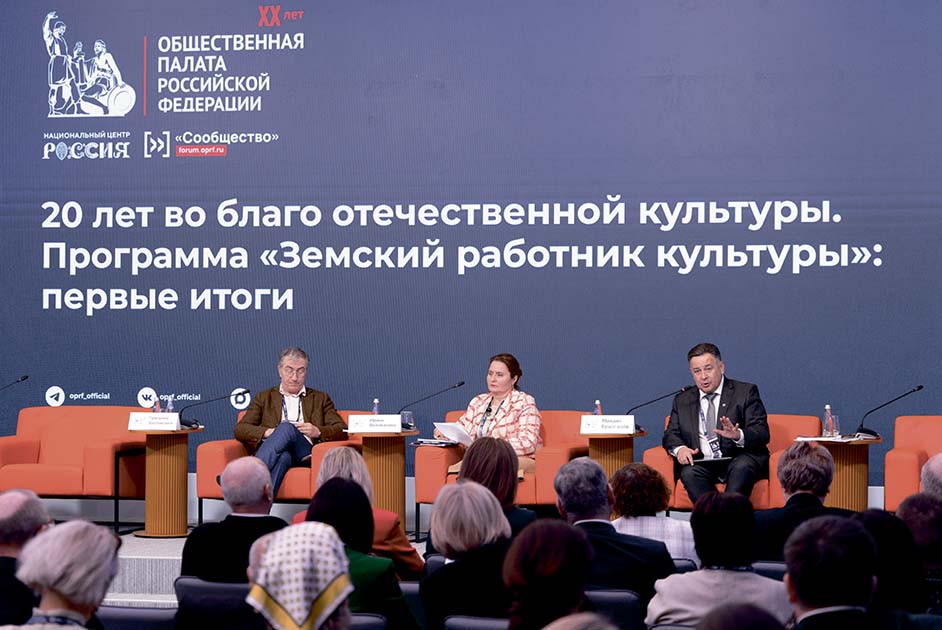 Grigory Zaslavsky, Irina Velikanova, Mikhail Bryzgalov during a panel discussion on the outcomes of implementing the "Zemsky Cultural Worker" program. "Community" Forum. October 31, 2025 / Press Service of the Civic Chamber of the Russian Federation
Public Organizations Promote the Values of Physical Culture, Sports, and a Healthy
Lifestyle
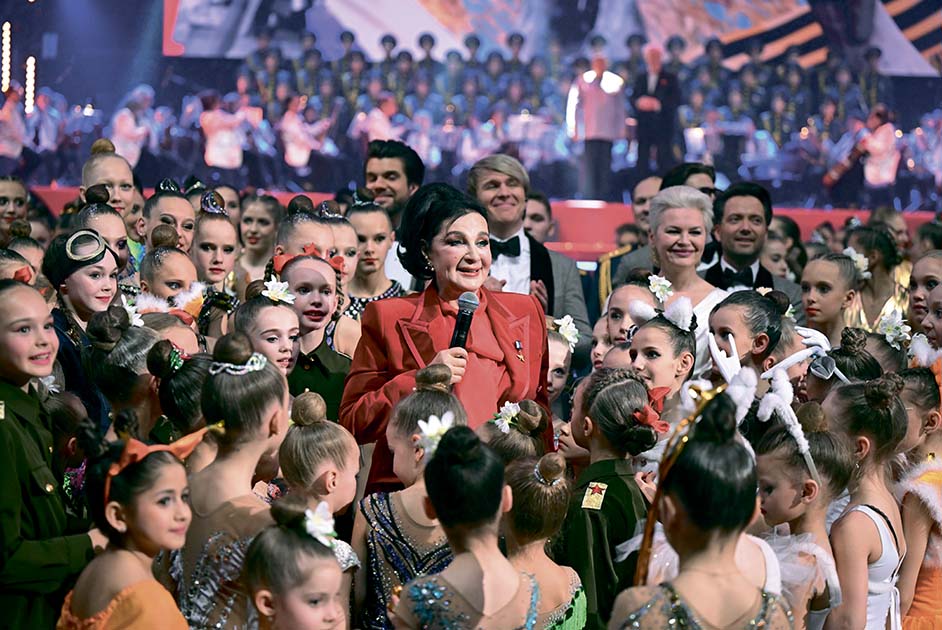 Popularizing a healthy lifestyle and developing mass sports is a key focus area of the relevant Civic Chamber Commission on Physical Culture, Sports, and a Healthy Lifestyle, headed by the celebrated rhythmic gymnastics coach, Hero of Labor of the Russian Federation, Honored Worker of Physical Culture of the Russian Federation Irina Viner. / Stanislav Silyanov
Throughout 2025, there was active development of new sports public organizations, including associations of
sports clubs, leagues of sports societies, specialized public organizations, student sports leagues, student
sports clubs, and others independent of the International Olympic Committee and similar international sports
structures.
In 2025, public organizations showed increased participation in the Civic Chamber's international
competition, "Best Practices for a Healthy Lifestyle." This year, over 10,000 civil society activists, as
well as representatives of sports communities from China, Argentina, and Chile, submitted applications.
The main goal of the competition is to draw public attention to the importance of protecting citizens'
health, and to collecting, sharing, and replicating the best Russian and global practices for preserving
health and maintaining a healthy lifestyle.
Creating comfortable conditions for physical activity is facilitated by the federal project "Sport – the Norm
of Life."
According to data from January 2025, over five years of the project's implementation, around 500 sports
facilities have been built in Russia, hundreds of venues have been modernized, and tens of thousands of
specialists have been trained.
Despite these official figures, the Civic Chamber continues to receive appeals from various regions of the
Russian Federation regarding the state of sports infrastructure in different municipalities and
regions. Consequently, despite the officially high percentage of sports facility provision in our cities,
the actual public demand is significantly broader and more varied.
With the overarching goal of involving 70% of Russian citizens—or 93 million people of all ages and health
groups—in regular physical activity by 2030, thereby making sport a norm of life, the public sector retains
a leading and pivotal role in promoting the values of physical culture, sports, a healthy lifestyle, as well
as mass and street sports.