Combating Corruption
At the beginning of the year, the Civic Chamber opened a corruption hotline where citizens could not only report corrupt practices by authorities but also receive necessary advice. This was prompted by cases where Russian Interior Ministry personnel were provoking individuals into offering bribes to improve crime clearance statistics. Anatoly Kucherena, Chair of the Civic Chamber’s Commission on Public Oversight of Law Enforcement and Reform of the Judicial-Legal System, stated that such actions should lead to criminal prosecution for police officers.
Simultaneously, a working group on judicial reform was established within the Civic Chamber, involving lawyers, criminologists, and representatives of the Prosecutor’s Office. Later, during a meeting with the Prosecutor General of the Russian Federation, the role of the Prosecutor’s Office in preventive measures and avenues for humanizing criminal legislation were discussed.
That same year, the Civic Chamber prepared a report on the effectiveness of anti-corruption activities, which was presented to the President of Russia. It contained specific recommendations for improving whistleblower protection, creating mechanisms for public (civil) oversight, defining specific criteria for evaluating anti-corruption measures, and mandating the consideration of expert review results.
Unified State Exam 2.0
The seventh year of the Unified State Exam (USE) revealed that the procedure required significant refinement.
Ongoing discussions on improving the organization of the exam were held at the Civic Chamber’s platform, gathering complaints and suggestions from schoolchildren, parents, and experts.
Yaroslav Kuzminov, Chair of the Civic Chamber’s Commission on Education Development, proposed several key changes. These concerned cross-review of exam papers, the choice of exam difficulty level, the inclusion of a foreign language in the mandatory list, and making the exam independent from the Russian Ministry of Education and Science.
Other proposals included the early publication of test items, video recording of all exam stages, independent teacher certification, and a prohibition on score reduction after appeals.
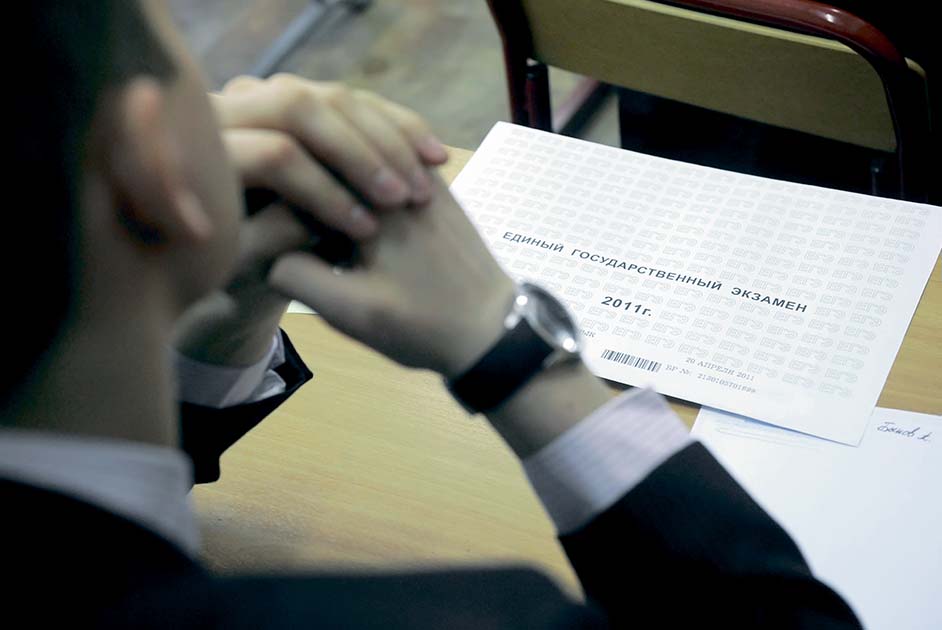 A student of Moscow School No. 1254 before taking the early-period Unified State Exam in Russian. April 20, 2011. Grigory Sysoev / RIA Novosti
Electoral Observation
The 2011 State Duma elections initiated work on new forms of public oversight over voting.
The Civic Chamber proposed expanding the pool of observers by allowing their accreditation not only from political parties but also from public organizations. Civil society activists also advocated for the right of citizens to document voting violations through photo and video. The Civic Chamber’s proposals found support from the Central Election Commission (CEC) of Russia, although many alleged violations during the State Duma deputy elections ultimately were not confirmed. Despite the skeptical attitude of representatives from the radical political opposition, an important step was taken towards establishing the institution of public election observation, which later became one of the key instruments of civic (public) oversight in Russia. Today, several tens of thousands (and over 100,000 during federal electoral procedures) of independent public observers monitor the voting process in elections at various levels.
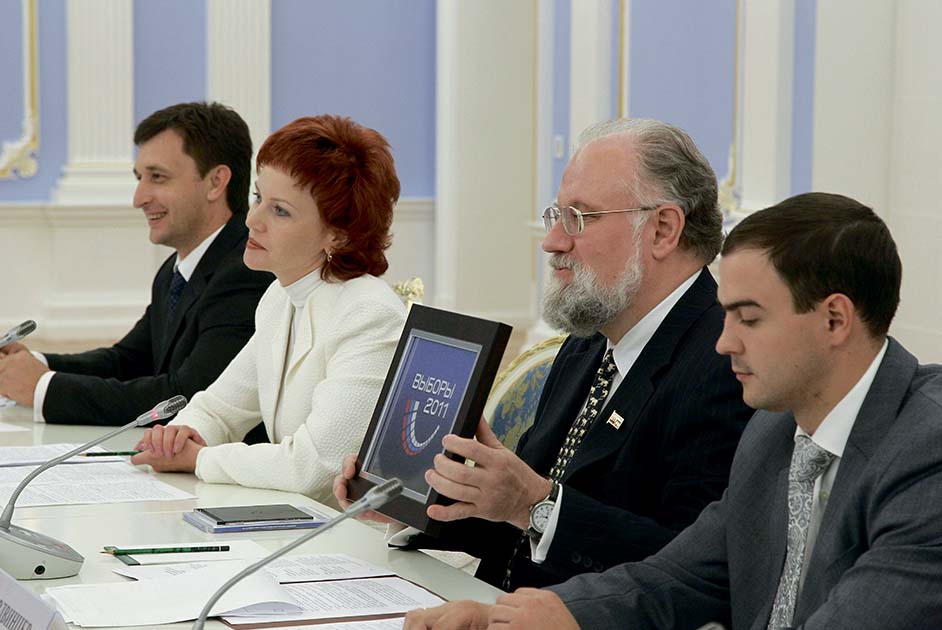 Chairman of the CEC of Russia Vladimir Churov during a meeting between the President of Russia and representatives of regional election commissions. July 26, 2011. Vladimir Rodionov / ITAR-TASS
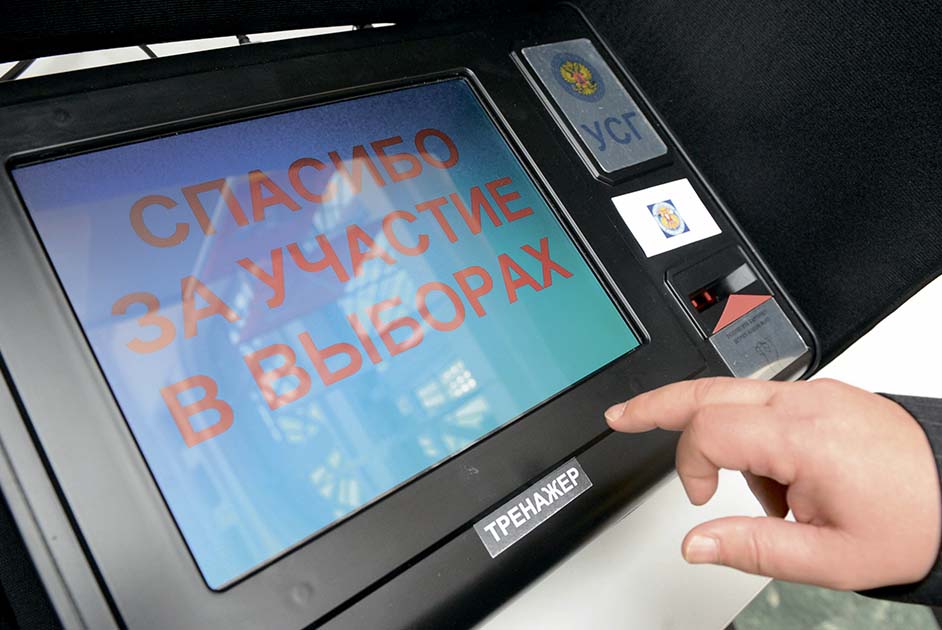 During a test vote using the State Automated System (SAS) "Elections" before the elections of deputies to the State Duma of the fifth composition, scheduled for 2011. Artyom Korotayev / ITAR-TASS
International Activities
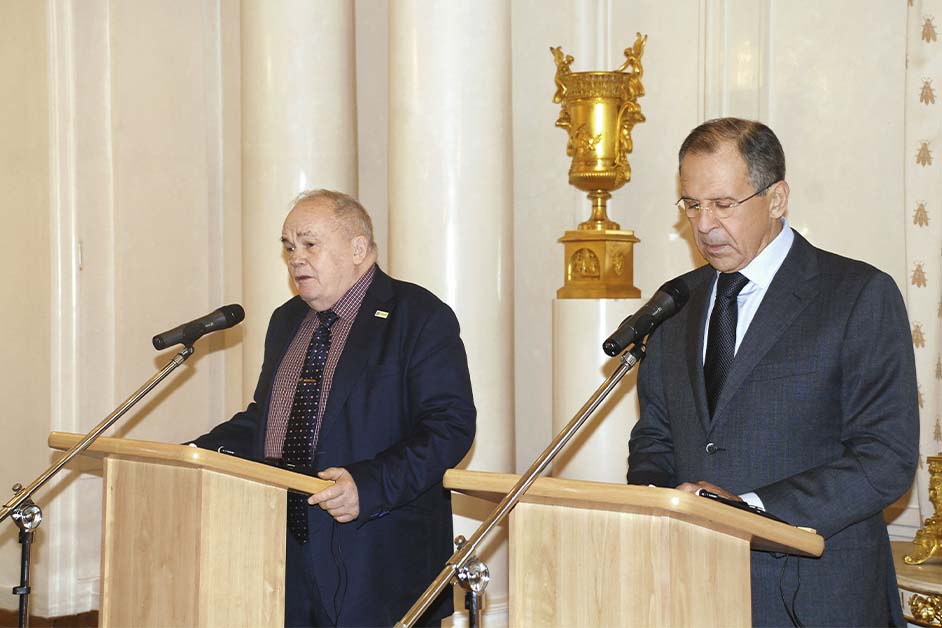 Evgeny Velikhov at a reception at the Ministry of Foreign Affairs of Russia on the occasion of the Civic Chamber’s election as Chair of the International Association of Economic and Social Councils and Similar Institutions (AICESIS). Moscow. November 6, 2013 / Press Service of the Civic Chamber of the Russian Federation
In 2011, the Civic Chamber joined the Board of the International Association of Economic and Social Councils and Similar Institutions (AICESIS).
This provided Russian civil society with the opportunity to directly participate in shaping the international agenda. One of the outcomes was Russia’s involvement in preparing the global report titled "Civil Society’s Response to the Global Economic Crisis," which also reflected the Russian perspective.