Youth Policy
The Youth Agenda Took a Prominent Place
in 2009.
The Civic Chamber developed its own vision for the priorities of state youth policy, which included:
engaging young people in addressing national challenges, developing volunteerism, and creating
conditions for professional careers. Members of the Civic Chamber emphasized fostering a culture of
innovation, intercultural dialog, and healthy lifestyles. In this way, the Civic Chamber sought to build
a long-term strategy for working with the generations that would define the country’s future.
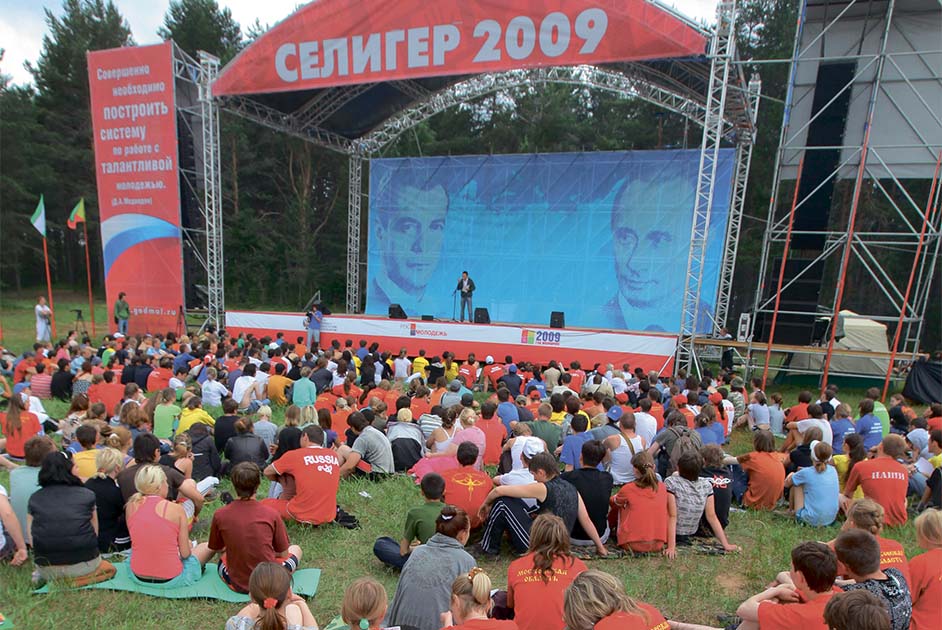 At the All-Russian Youth Educational Forum "Seliger-2009". July 2, 2009. Ilya Pitalyov / RIA Novosti
Public Monitoring of Crisis Phenomena
The Civic Chamber’s Flagship Project in 2009 was Public Monitoring of Crisis
Phenomena.
For this purpose, a working group was established within the Civic Chamber, uniting civic chambers from a
number of constituent entities of the Russian Federation, public councils under federal executive
authorities, as well as representatives from the offices of the Plenipotentiary Representatives of the
President of the Russian Federation in the federal districts.
The conducted monitoring provided an independent assessment of the socio-economic situation, enabled the
evaluation of crisis development scenarios, and proposed measures to mitigate its consequences. The
results were included in the Civic Chamber’s annual report on the state of civil society and proved
valuable not only for society but also for the country’s leadership.
Law on Socially Oriented NPOs
In 2009, the Civic Chamber initiated the preparation of a concept for a draft law amending Federal Law
No. 7-FZ of January 12, 1996 "On Nonprofit Organizations." The amendments aimed to define mechanisms and
measures for supporting socially oriented nonprofit organizations.
The core idea was to establish for the first time in Russian legislation a special status for those NPOs
whose activities are aimed at solving social problems and developing civil society. This status would
grant them access to new resources and improve the regulatory framework for cooperation with the
state.
The corresponding federal law was adopted and signed in 2010, but it was the groundwork laid in 2009 that
made it possible.
A Sober Policy:
Regulating the Alcohol Beverage
Market
Another prominent initiative of the Civic Chamber was its concept for state
regulation of the alcohol market.
Specifically, in this sphere, the Civic Chamber proposed reinstating the state monopoly on the retail
sale of alcohol and increasing excise duties.
The goals of this proposal were to reduce excessive consumption and enhance the fight against
counterfeit products. These proposals received support from both relevant state authorities and market
experts.
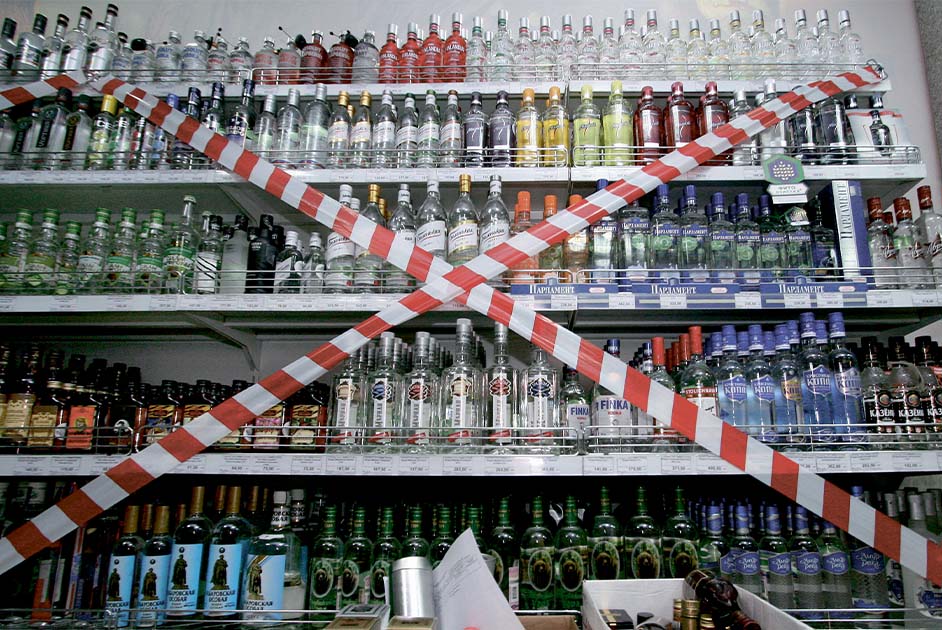 A storefront with alcohol products in one of the shops of the Primorsky Krai following a joint inspection by civic activists, police,
and representatives of Rospotrebnadzor to check compliance with the rules for selling alcoholic beverages. January 28, 2010. Vitaly Ankov /
RIA Novosti
A storefront with alcohol products in one of the shops of the Primorsky Krai following a joint inspection by civic activists, police,
and representatives of Rospotrebnadzor to check compliance with the rules for selling alcoholic beverages. January 28, 2010. Vitaly Ankov /
RIA Novosti