2008
Expertise and Human Rights
By 2008, the Civic Chamber had ceased to be a new institution and was increasingly acting as an expert platform capable of influencing legislative processes and protecting the interests of citizens.
By 2008, the Civic Chamber had ceased to be a new institution and was increasingly acting as an expert platform capable of influencing legislative processes and protecting the interests of citizens.
During the meeting with President of Russia Dmitry Medvedev, members of the Civic Chamber discussed improving the mechanisms for civil society’s participation in the legislative process.
The President of Russia supported the initiative to develop the institution of public expert review of draft laws. Subsequently, the Rules of Procedure of the State Duma enshrined a provision mandating that draft federal laws, federal constitutional laws, and laws on amendments to the Constitution of the Russian Federation, along with all accompanying documents and materials, be forwarded to the Civic Chamber after their submission to the State Duma.
This decision strengthened the role of the Civic Chamber in the legislative process by ensuring its timely notification and enabling a more comprehensive public expert review of draft regulatory acts.
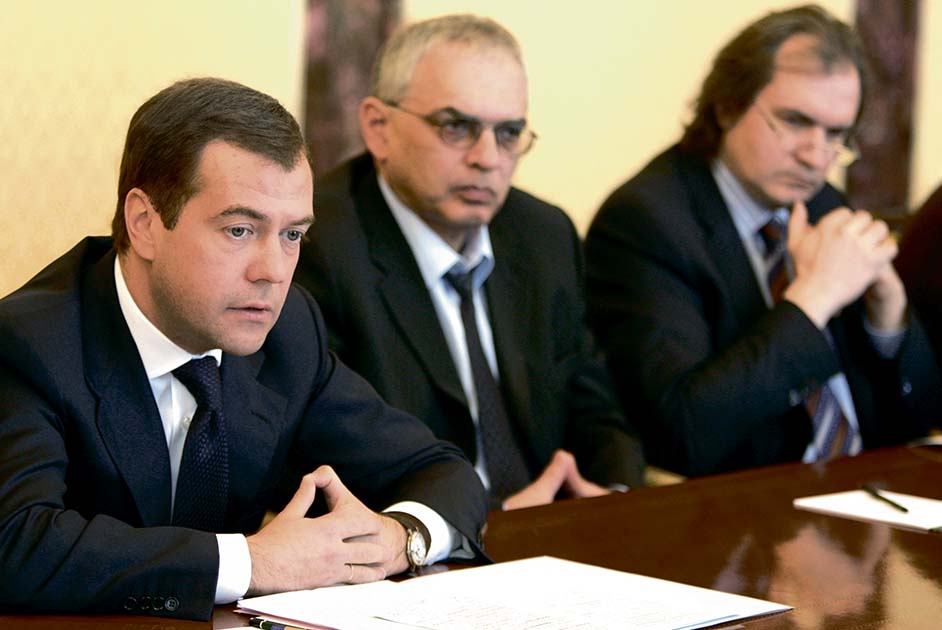 Karen Shakhnazarov and Valery Fadeev at a meeting between the President of Russia Dmitry Medvedev and members of the Civic Chamber of the Russian Federation in the Kremlin. March 19, 2008. Dmitry Astakhov / RIA Novosti
A priority for the Civic Chamber in 2008 also became participation in improving tools for protecting human rights within the penal system.
It should be noted that complaints about conditions in places of forced detention were received regularly, and the problem required an institutional solution.
At the initiative of the Civic Chamber, Federal Law No. 76-FZ of June 10, 2008, "On Public Oversight of the Observance of Human Rights in Places of Forced Detention," was prepared and adopted.
The law laid the groundwork for establishing Public supervisory commissions (PSCs) in the constituent entities of the Russian Federation. The Civic Chamber became the coordinator of this work, conducting public debates, forming the commissions, and training activists. By the autumn of 2009, PSCs were operating in 70 regions of the Russian Federation, enabling the human rights community to obtain, for the first time, a legal instrument for the systematic monitoring of human rights observance in places of forced detention.
Thus, 2008 cemented the status of the Civic Chamber as a mediator between society and the state—an entity that, on the one hand, monitors the adoption of socially significant decisions and, on the other, directly ensures the observance of human and civil rights.
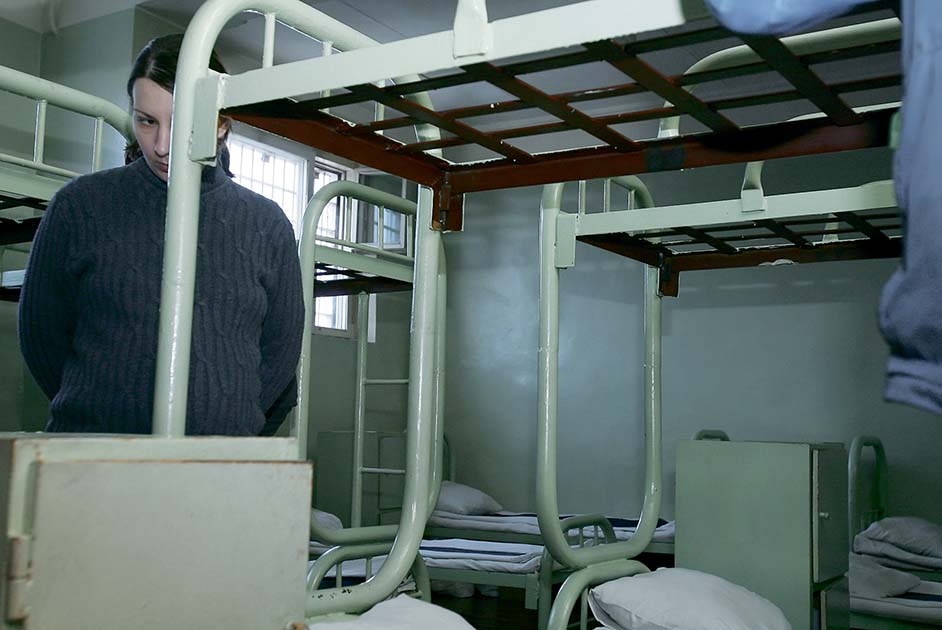 In the "Pеchatniki" women’s pre-trial detention center. January 30, 2008. Ruslan Krivobok / RIA Novosti
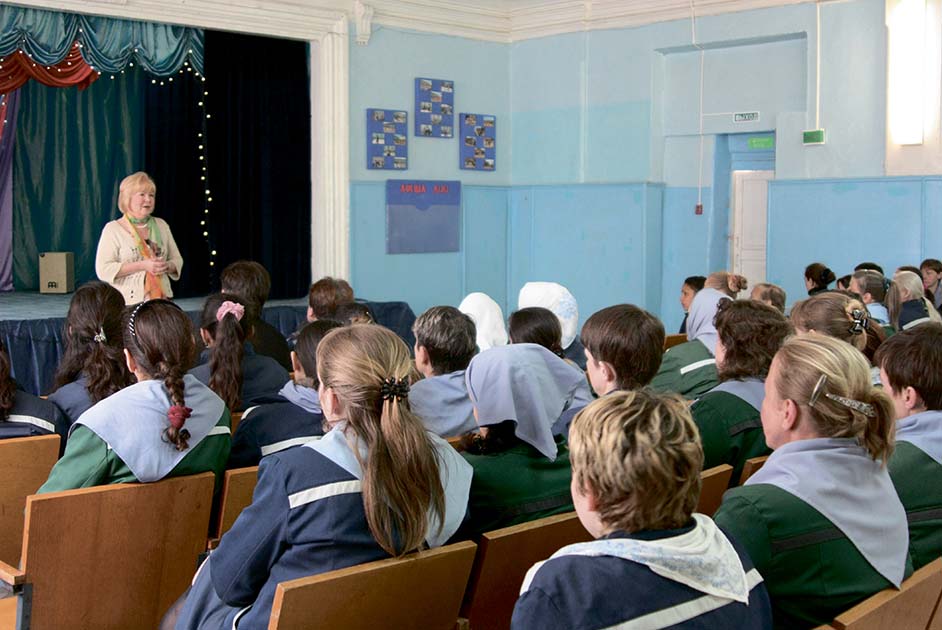 Member of the Civic Chamber’s Commission on Public Oversight of Law Enforcement Agencies and Reform of the Judicial-Legal System, Chairperson of the Presidium of the All-Russian Public Organization "Council of Public Supervisory Commissions" Maria Kannabikh during a visit to one of the women’s correctional colonies. 2008 / Press Service of the Civic Chamber of the Russian Federation