Concept for the Development of Charitable Activities
In 2019, the Civic Chamber continued its systematic work to shape state policy priorities in key areas of social development. One significant outcome was the adoption of the Concept for Facilitating the Development of Charitable Activities for the Period until 2025. The document aimed to expand citizen participation in charitable initiatives, foster a culture of giving, strengthen transparency and trust in charitable institutions, and enhance the effectiveness of relevant programs.
The Civic Chamber actively participated in discussing and shaping the provisions of the Concept, serving as a link between the nonprofit sector, businesses, and state structures.
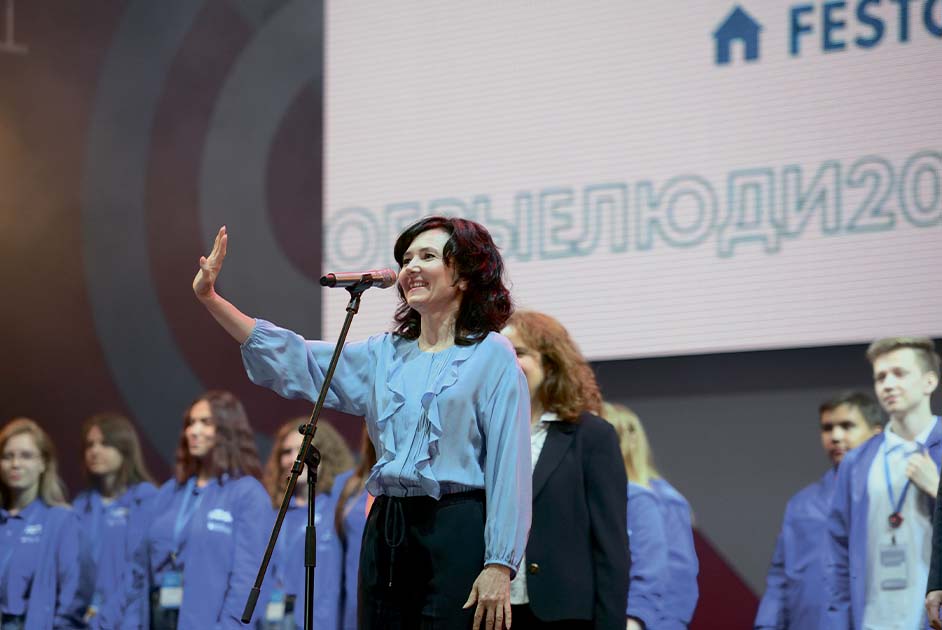 President of the Civic Chamber of the Russian Federation Lidia Mikheeva during the gala concert of the "Good People" festival, organized by the Civic Chamber in the "Muzeon" Park of Arts in Moscow. September 5, 2020 / Press Service of the Civic Chamber of the Russian Federation
In 2019, the Civic Chamber President Valery Fadeev assumed the leadership of the Council for the Development of Civil Society Institutions and Human Rights. At a plenary session of the Civic Chamber, Lidia Mikheeva, head of the S.S. Alexeev Research Center for Private Law under the President of the Russian Federation, Honored Lawyer of the Russian Federation, and a member of the Civic Chamber since 2014, was elected as the new President.
Under Lidia Mikheeva’s leadership, the Civic Chamber intensified its work on public expert review of legislation, analysis of law enforcement practice, and engagement with legislative initiative entities.
She also places significant emphasis on public diplomacy. During this period, the Civic Chamber’s activities on the international track were substantially reinvigorated: Russia once again assumed the presidency of AICESIS, and, thanks to Lidia Mikheeva’s professional contribution, work was conducted to modernize its Charter; the Civic Chamber formed and dispatched humanitarian and observation missions abroad.
Preparation of Strategic Documents for Supporting Volunteerism
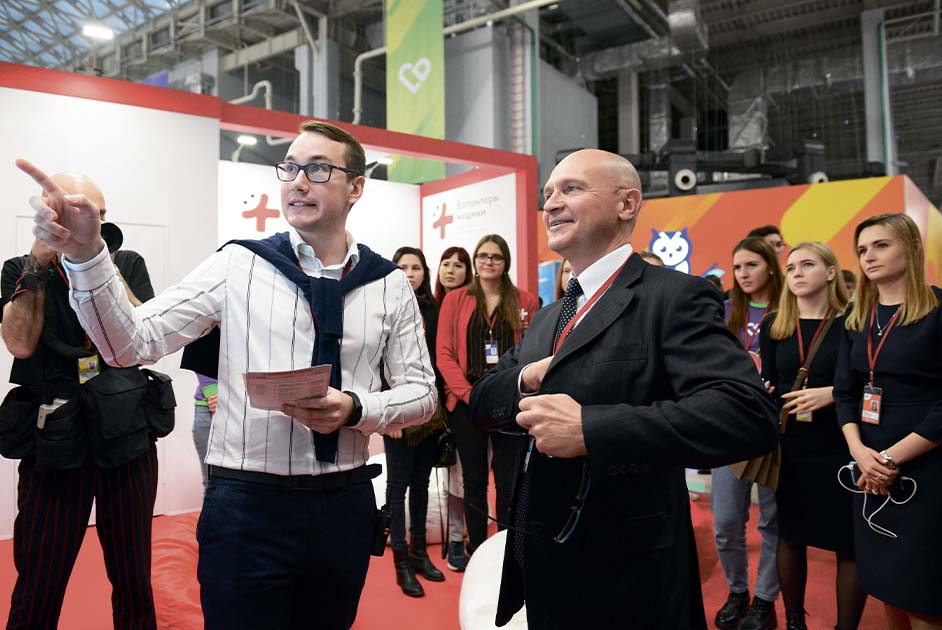 Leader of the "Medical Volunteers" movement Pavel Savchuk gives a tour to First Deputy Head of the Presidential Administration of the Russian Federation Sergey Kiriyenko at the "Volunteers of Russia" forum. Sochi. December 2019. Ekaterina Lyzlova / RIA Novosti
In 2018–2019, key documents aimed at developing the volunteer movement in Russia were adopted: the Concept for the Development of Volunteerism until 2025 and the Action Plan for its implementation. The documents envisaged broad citizen involvement in patriotic education, preserving historical memory, and other spheres of public activity.
The Civic Chamber actively participated in developing and discussing these documents, primarily through the Coordination Council for Volunteerism. Most of the Civic Chamber’s proposals were taken into account. The document outlined 95 steps to remove barriers for volunteers, launch educational programs, and support sectoral volunteerism in healthcare, social protection, culture, ecology, and other fields.
Preparation of the National Program for Socio-Economic Development of the Far East
In 2019, the Civic Chamber organized a large-scale public debate on the program for the socio-economic development of the Far East until 2024 and with a perspective to 2035. For the first time, the participation of civil society was enshrined as a key condition for strategic planning.
To support the dialog, the interregional project "My Ideas for the Far East" was implemented, uniting citizens, experts, government authorities, and businesses to jointly develop long-term solutions within the program’s framework. Also, with the support of the Civic Chamber, the Council of Civic Chambers of the Constituent Entities of the Russian Federation in the Far Eastern Federal District was established.
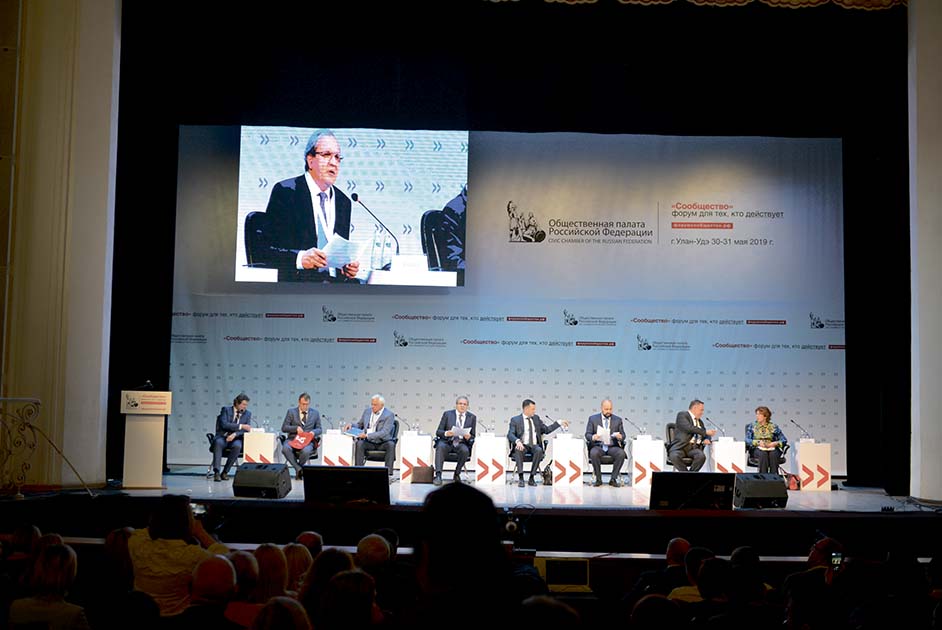 Public debate on the Far East Development Program at the "Community" forum in Ulan-Ude. May 2019 / Press Service of the Civic Chamber of the Russian Federation
Implementation of a New Institutional Management Model in the Sphere of Waste Management
Special attention of the Civic Chamber was devoted to the national project "Ecology."
In particular, the Civic Chamber proposed a concept for a new institutional management model in the sphere of waste management, focused on transparency, sustainability, and efficiency.
In January 2019, as part of this initiative, the Russian Environmental Operator was established—a public legal company responsible for developing waste processing infrastructure, improving the industry’s efficiency, and ensuring environmental safety. This initiative became an example of systemic participation by civil society in shaping and supporting state decisions.
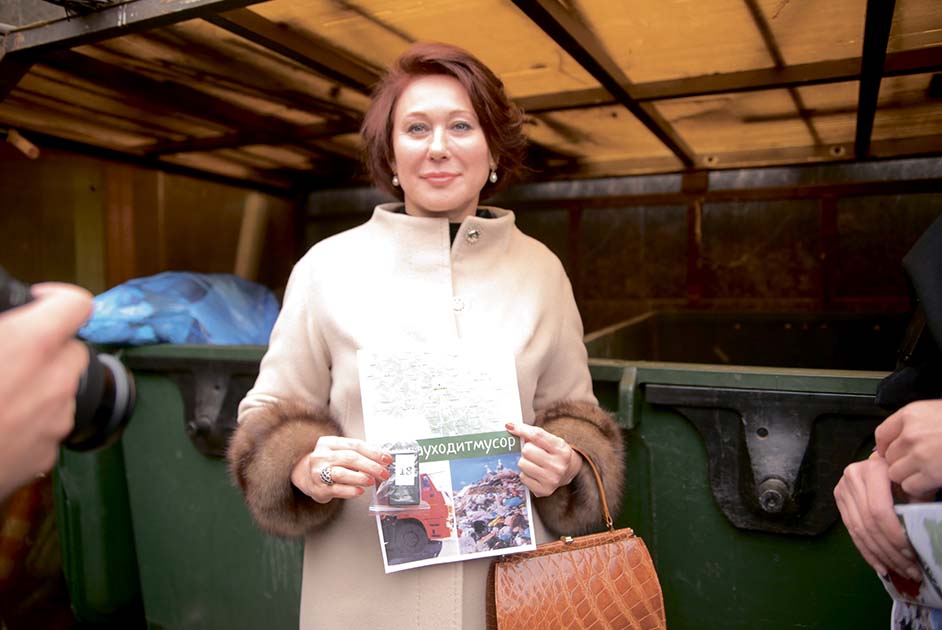 Civic Chamber member Albina Dudareva installs a GLONASS tracker on a garbage bin to monitor MSW removal as part of the Civic Chamber’s campaign "Where Does the Trash Go?". October 3, 2017 / Press Service of the Civic Chamber of the Russian Federation
Formalizing the Concepts of "Social Entrepreneurship" and "Social Enterprise"
One of the key achievements of the Civic Chamber
in 2019 was the legal formalization of the concepts of "social entrepreneurship" and "social enterprise."
Amendments to Federal Law
No. 209-FZ of July 24, 2007, "On the Development of Small and Medium-Sized Entrepreneurship," established the legal basis for state support of organizations implementing socially oriented initiatives.
The criteria included job creation for socially vulnerable groups, the production of goods and services for such groups, as well as activities aimed at addressing socially significant challenges. The Сivic Chamber submitted a number of comments and proposals, the majority of which were taken into account in the final version of the corresponding draft law.
Improving Legislation in the Sphere of Public Health
The Civic Chamber actively participated in refining the draft federal law "On the Fundamentals of Public Health Protection in the Russian Federation," specifically regarding the provision of palliative medical care.
During a broad expert discussion involving the professional community, patient organizations, and human rights advocates, proposals were developed to expand the definition of palliative care, improve access to pain management, and institutionalize social, psychological, and spiritual support. These proposals were taken into account during the preparation of the final version of the draft law.
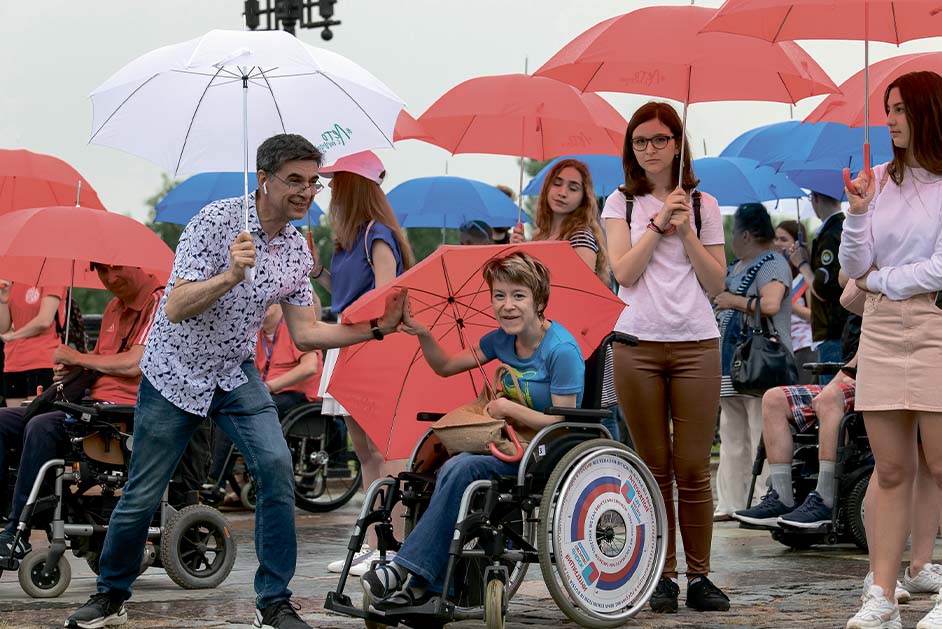 The inclusive flash mob "We Are Russia," organized by the Civic Chamber of the Russian Federation on Poklonnaya Hill in Moscow / Press Service of the Civic Chamber of the Russian Federation
Development of a Federal Target Program for Military
Memorial
Sites
The Civic Chamber, together with the civic chambers of the constituent entities of the Russian Federation and search NPOs, actively participated in the development of the Federal Target Program "Creation and Restoration of Military Memorial Sites for 2019–2024," and its proposals were taken into account during the formulation of this program.
Institutionalization and Expansion of the Authority of Public Councils and PSCs
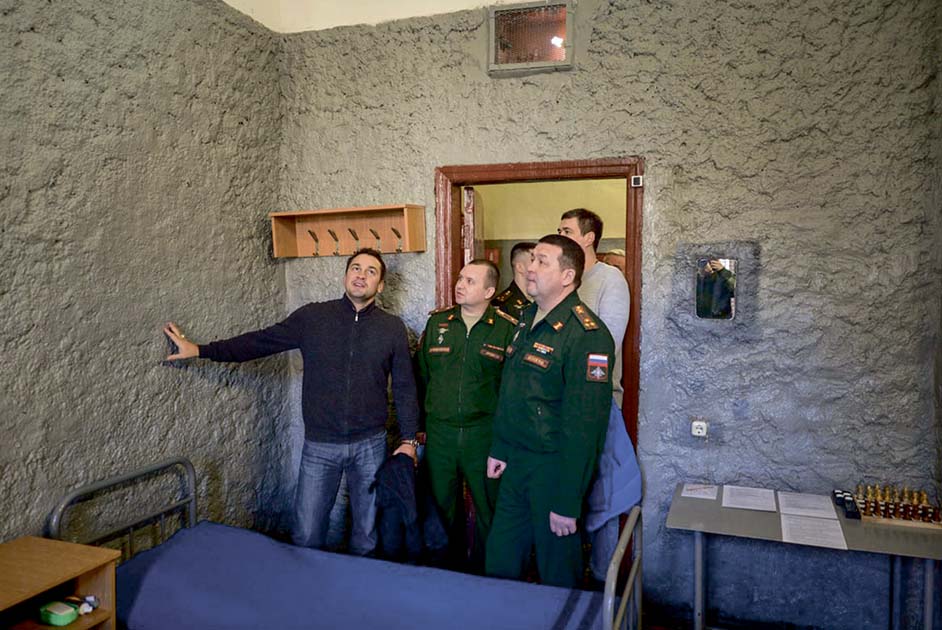 Member of the Civic Chamber of the Russian Federation Dmitry Nosov during a visit to places of forced detention in St. Petersburg. 2019 / Press Service of the Civic Chamber of the Russian Federation
2019 became a landmark year for the development of the public oversight institution. On the initiative of the Civic Chamber, gaps were addressed, and mechanisms for the formation and operation of public councils under federal executive authorities and Public Supervisory Commissions (PSCs) were systematized.
A key step was amending Government Resolution No. 481 of August 2, 2005, which established unified requirements for the procedure of forming public councils.
Specifically, the Civic Chamber was assigned the function of organizing competitions for forming these councils, uniform qualification criteria for candidates and the procedure for nominating chairpersons were defined. The term of office for council members was set at no more than three years. In the sphere of PSCs, 2019 saw the largest campaign to form commissions in 45 constituent entities simultaneously.
New Format of the Civic Chamber’s Work—Special Reports
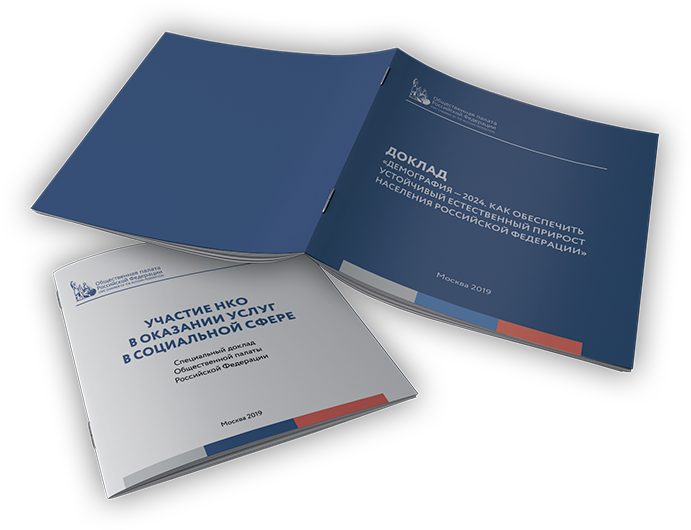
In 2019, the Civic Chamber introduced a new tool into its practice—special reports, which strengthened the analytical and expert component of its activities. These materials became full-fledged documents of public analysis, where systemic conclusions were combined with research data, and proposals from civil society were considered on par with state initiatives.
The themes of the first reports covered key issues on the public agenda:
- "Demography-2024: How to Ensure Sustainable Natural Population Growth in the Russian Federation";
- "Participation of NPOs in Providing Services in the Social Sphere";
- "Family Policy: Support Measures Through the Eyes of Families";
- "How to Preserve Rural Areas: Problems of Population Employment."