Law on Civic Chambers of the Constituent Entities of the Russian Federation
A significant event for the public oversight system in 2016 was the adoption of Federal Law No. 183-FZ of June 23, 2016, "On the General Principles of Organization and Activities of Civic Chambers of the Constituent Entities of the Russian Federation." It established unified approaches to the formation of civic chambers in the constituent entities of the Russian Federation, their organizational, logistical, and technical support, and secured equal legal status and independence for these bodies.
The draft law was prepared with the participation of the Civic Chamber, a wide range of experts, and representatives of the nonprofit sector. This Federal Law came into force in 2017.
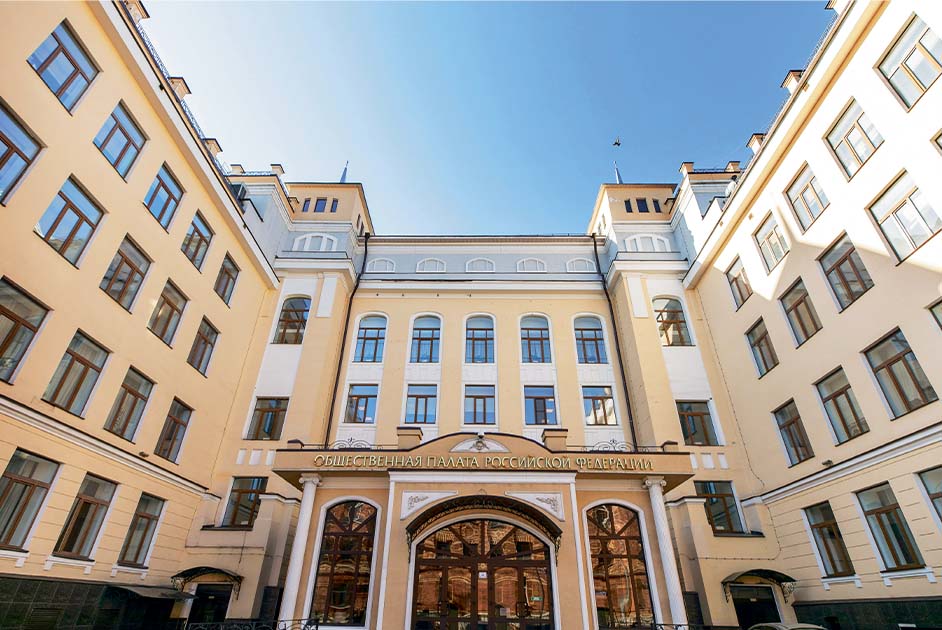 The building of the Civic Chamber of the Russian Federation in Moscow / Press Service of the Civic Chamber of the Russian Federation
Monitoring the Reform of Orphanages
In 2016, the reform of orphanages remained one of the key topics of public debates. The previous year, a Russian Government resolution had come into force, laying the foundations for a large-scale reorganization of these institutions.
A year later, in September, the Civic Chamber, together with the civic chambers of the constituent entities of the Russian Federation, initiated monitoring of the reform's progress. Working groups were formed for inspections, comprising psychologists, doctors, NPO experts, volunteers, and specialists of various profiles who traveled to orphanages across the country.
The monitoring results recorded not only problems and vulnerable aspects of the reform but also proposals and ways to address them. Public organizations and businesses became involved, drawing local authorities' attention to factors slowing down the process. The beginning of 2017 was marked by the submission of the final report to the Deputy Chairman of the Government of Russia.
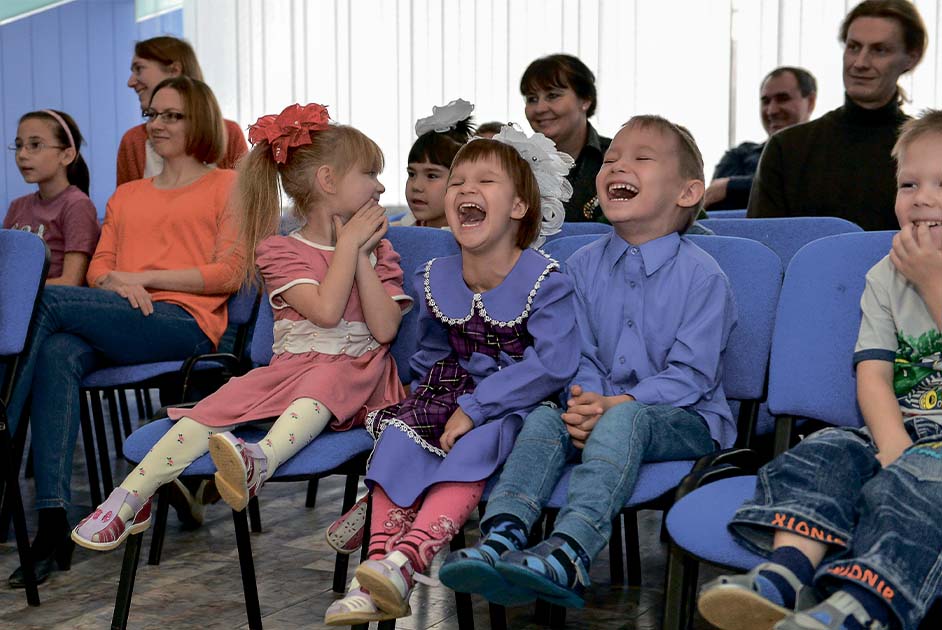 Residents of one of the boarding schools in Chelyabinsk at a performance arranged for them by visiting artists from Moscow who came with participants of the "Train of Hope" adoption assistance program. October 24, 2016. Vladimir Pesnya / RIA Novosti
Facilitating the Development of Socially Oriented NPOs
Since 2015, the Civic Chamber has been conducting a series of "Community" forums. Throughout 2015, the forums were held in Perm, Omsk, Khabarovsk, Yalta, Yekaterinburg, Cherepovets, Grozny, and Volgograd, with the final forum taking place in Moscow on November 3–4, 2015. In total, more than ten thousand representatives of NPOs and civil activists participated in the 2016 forums, enabling the formation of a comprehensive picture of the third sector's needs and opportunities.
One of the forums' goals was to develop the Concept for Facilitating the Development of Socially Oriented NPOs in Russia.
The document proposed institutionalizing the work of such organizations, enhancing their economic sustainability, expanding citizen participation in nonprofit projects, and changing the perception of the third sector.
Alongside the Concept, experts also presented the Map of Resource Centers for Supporting NPOs. This analytical tool allowed nonprofit organizations and state authorities to navigate the third sector's development infrastructure and utilize existing resources as effectively as possible.
Simultaneously, in November 2016, a draft bill amending the Federal Law "On Nonprofit Organizations" was submitted to the State Duma.
It stipulated financial, property, informational, and consultative support for NPOs providing socially beneficial services. The proposed amendments opened up opportunities for NPOs to use free airtime on regional and municipal TV channels and radio stations for social advertising, established deadlines for providing subsidies and property support from regional authorities. The necessity for such support was also emphasized by the President of Russia at one of the final "Community" forums.
Improving Legislation in the Field of Forestry
The summer of 2016 was remembered for massive forest fires. On some days, fires engulfed up to 2.3 million hectares of forest simultaneously, with 13 constituent entities of the Russian Federation shrouded in smoke. The situation revealed serious gaps in forest management, which had begun to be restructured in the 2000s.
The Civic Chamber engaged in discussing the problem, preparing recommendations for the Russian Ministry of Natural Resources and the Federal Forestry Agency. In particular, it was proposed to legally mandate the development of forest fire protection plans for the territories of the constituent entities of the Russian Federation, adopt regulatory legal acts for conducting preventive measures, and strengthen control over their implementation.
Throughout the year, the Civic Chamber held over ten events and actively participated in preparing a draft law on creating "green belts" around cities. These initiatives became part of broader efforts to modernize forest legislation and enhance the resilience of ecosystems during fire-hazard seasons.
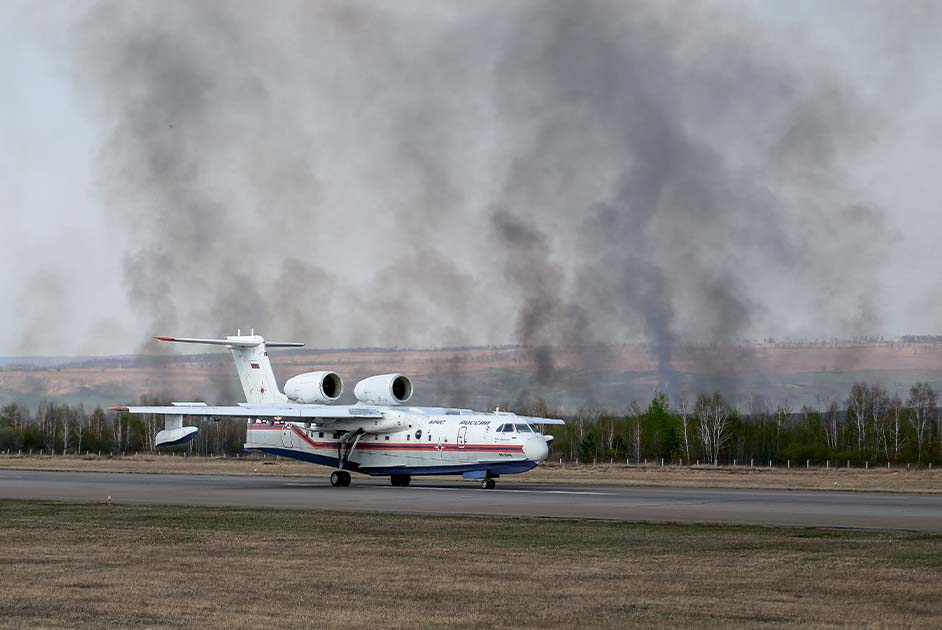 A BE-200ChS amphibious aircraft of the Russian Ministry of Emergency Situations at the Blagoveshchensk airport in Amur Oblast during forest firefighting operations.
May 8, 2016. Igor Ageyenko / RIA Novosti
A BE-200ChS amphibious aircraft of the Russian Ministry of Emergency Situations at the Blagoveshchensk airport in Amur Oblast during forest firefighting operations.
May 8, 2016. Igor Ageyenko / RIA Novosti