2013
Refining Civil Society Institutions and Public Oversight Tools
In 2013, the procedure for forming the Civic Chamber was changed, enabling it to continue strengthening its influence both domestically and internationally.
In 2013, the procedure for forming the Civic Chamber was changed, enabling it to continue strengthening its influence both domestically and internationally.
On January 28, a draft law on reforming the Civic Chamber was submitted to the State Duma. Experts had long noted that the federal Civic Chamber inadequately reflected regional diversity, and this new initiative was intended to correct that imbalance.
On February 13, a roundtable on "Improving the Mechanisms for Forming the Civic Chamber of the Russian Federation" was held at the Federation Council, where the idea to increase the Civic Chamber’s membership from 126 to 166 members, expand its regional representation, and introduce online voting was supported.
The changes were adopted in July. Thus, the Civic Chamber’s composition began to be formed as follows: 40 members are appointed by the President of Russia, 83 are delegated by civic chambers of the constituent entities of the Russian Federation, and another 43 are determined through a rating-based online vote by public organizations.
This decision helped connect the Civic Chamber with civic chambers of the constituent entities of the Russian Federation and made its composition more representative.
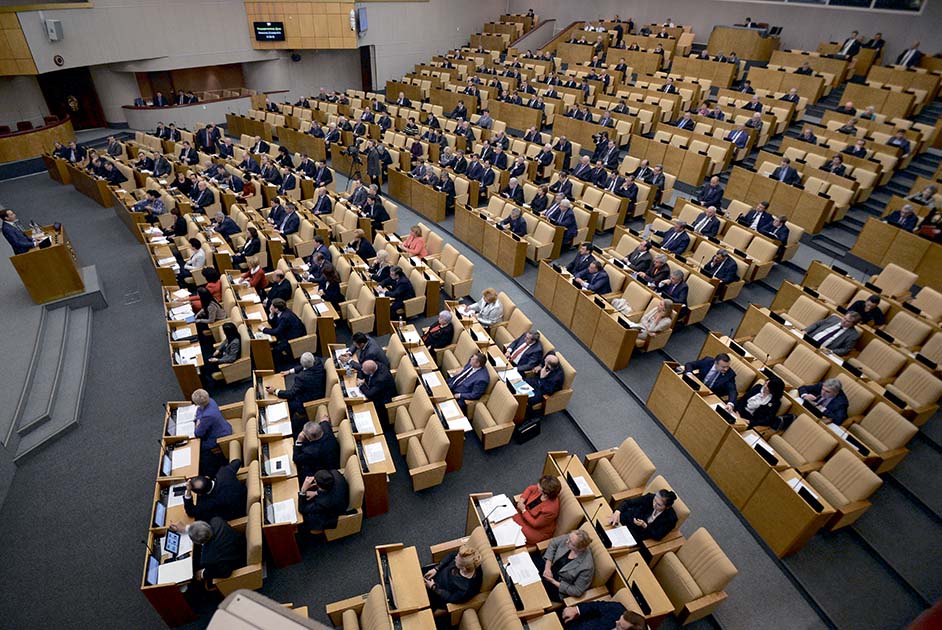 Consideration of the draft Federal Law No. 212605-6 "On Amending the Federal Law ‘On the Civic Chamber of the Russian Federation’" regarding changes to the formation procedure and increasing the number of members of the Civic Chamber of the Russian Federation at a session of the State Duma of the Russian Federation. December 23, 2013.
Alexey Filippov / RIA Novosti
Consideration of the draft Federal Law No. 212605-6 "On Amending the Federal Law ‘On the Civic Chamber of the Russian Federation’" regarding changes to the formation procedure and increasing the number of members of the Civic Chamber of the Russian Federation at a session of the State Duma of the Russian Federation. December 23, 2013.
Alexey Filippov / RIA Novosti
At the beginning of the year, in his Address to the Federal Assembly, Vladimir Putin proposed developing and adopting a law on public oversight.
The task was entrusted to the Civic Chamber and the Presidential Council for Civil Society and Human Rights Development.
Their joint work led to the creation of a concept for a draft law on the fundamentals of public oversight. The document introduced concepts such as public monitoring, expert review, hearings, and inspections, and enshrined the right of human rights defenders and initiative groups to assess the activities of state authorities and local self-government bodies.
In December, the concept was submitted to the President of Russia. Subsequently, the law became the legal foundation for public oversight.
At the end of 2013, the Federal Law "On the Fundamentals of Social Services for Citizens in the Russian Federation" was adopted. It came into force in January 2015, but preliminary discussion of this law and active work on it took place extensively on the Civic Chamber’s platform. Many ideas and proposals from civil society were incorporated into the final text of the draft law.
It should be noted that the law marked a turning point, as socially oriented NPOs gained the opportunity to compete with state-funded institutions and commercial organizations for the right to provide services to the population. This signified a new level of trust and the institutionalization of the third sector in the social sphere.
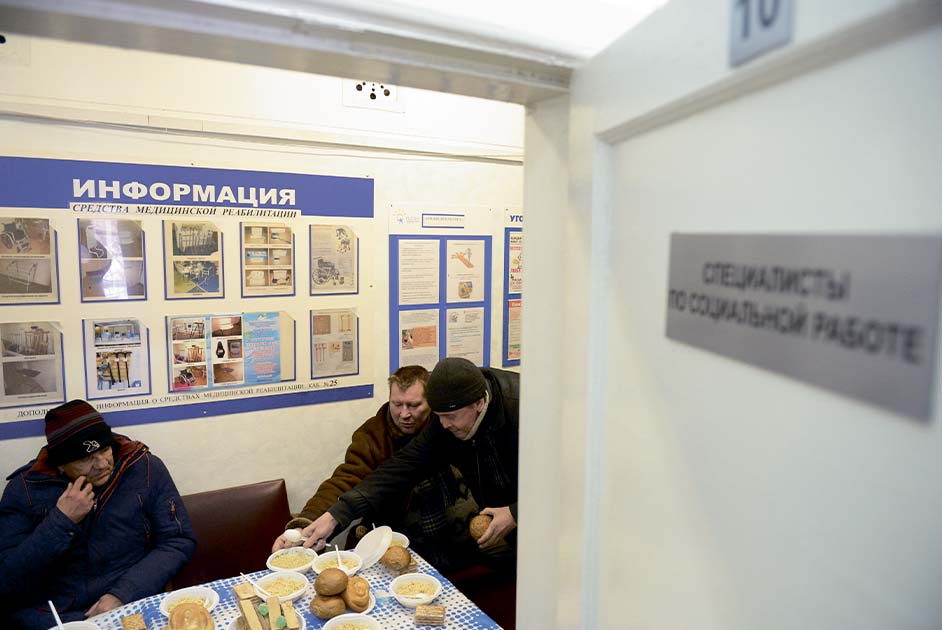 Individuals without a fixed abode receive a hot meal at a social service center in the Chkalovsky District of Yekaterinburg. November 16, 2015. Pavel Lisitsyn / RIA Novosti
2013 strengthened the international standing of the Civic Chamber, as Russia was elected to chair the International Association of Economic and Social Councils and Similar Institutions (AICESIS), which at that time united 72 national structures.
A highly significant theme was chosen for the chairmanship—"National Human Capital and New Sources of Competitiveness."
Within the association, education, healthcare, and sustainable development were discussed as key factors for the long-term competitiveness of nations.
During its two-year presidency, the Civic Chamber raised the organization’s profile. Specific achievements included conducting over 20 conferences, establishing connections with the United Nations and other international organizations, and welcoming three new countries into the association. In 2013, at the G20 Summit in St. Petersburg, a report titled "The Global Crisis and Its Consequences: A Civil Society Perspective," prepared with Russia’s participation, was presented. This allowed for articulating the position of global civil society on the platform of the G20 leaders for the first time.
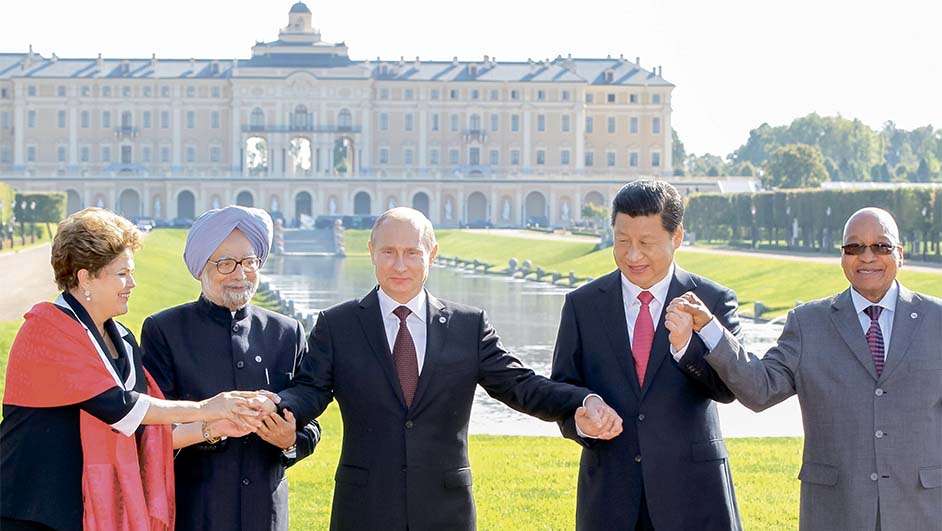 BRICS leaders (Brazilian President Dilma Rousseff, Indian Prime Minister Manmohan Singh, Russian President Vladimir Putin, Chinese President Xi Jinping, and South African President Jacob Zuma) at the G20 Summit in St. Petersburg. September 5, 2013 / Brazilian news agency Agência Brazil
In 2013, the Civic Chamber also focused on student issues.
For instance, following complaints about inflated dormitory fees, public monitoring was conducted, which led to public debates with the Russian Ministry of Education and Science and the Federal Service for Supervision in Education and Science (Rosobrnadzor). The outcome was the reinstatement of a regulation on maximum accommodation costs into the legal framework governing education, which helped curb such abuses.
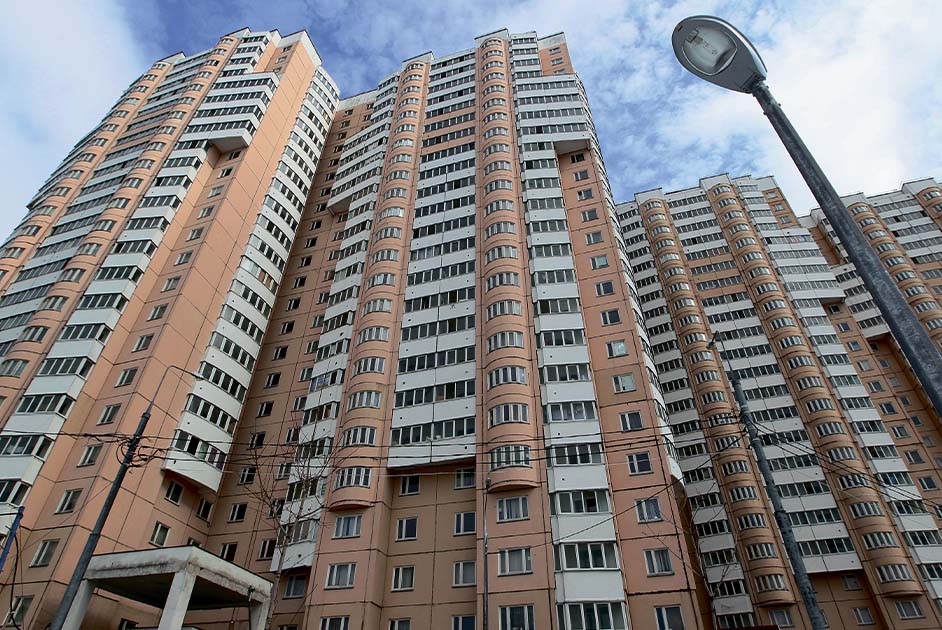 The dormitory building of the Moscow Engineering Physics Institute (MEPhI). April 2, 2013. Ruslan Krivobok / RIA Novosti
Another positive result of civil society intervention was the amendment of the Sanitary Rules and Norms (SanPiN) regulating children’s camping activities.
The original document issued by Rospotrebnadzor (Federal Service for Surveillance on Consumer Rights Protection and Human Wellbeing) had effectively made children’s tent camping impossible due to excessively strict and sometimes absurd requirements. Following the intervention of the Civic Chamber and the work of an expert group, the Russian Ministry of Justice registered an updated SanPiN, which incorporated the key suggestions.
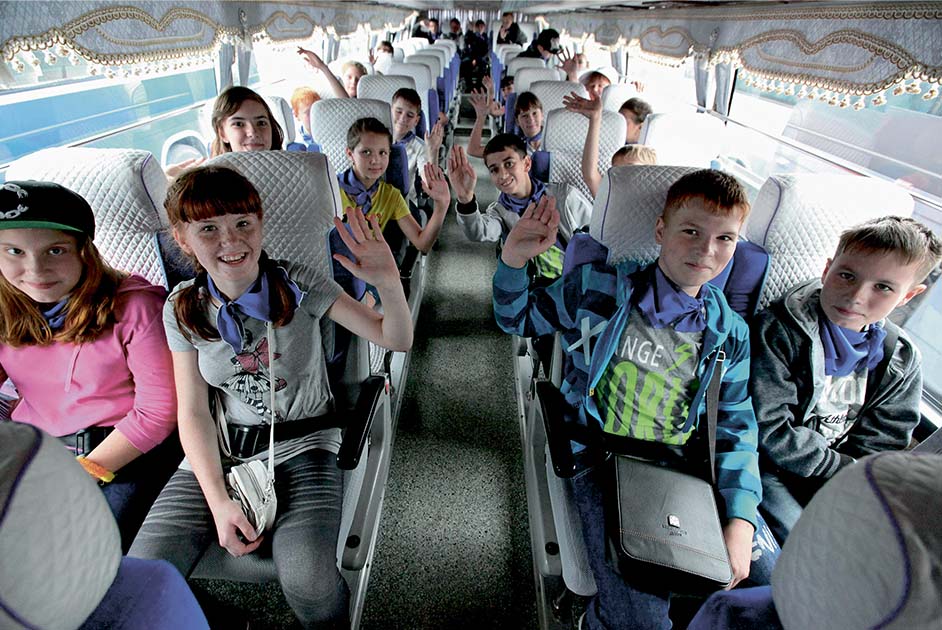 Children departing for recreational camps. August 28, 2013. Vitaly Ankov / RIA Novosti