Legal and Psychological Assistance to Participants of the SMO and Their Families
The Civic Chamber of the Russian Federation and the Committee of Families of Warriors of the Fatherland have significantly enhanced their cooperation in processing appeals from SMO participants and their family members on a wide range of issues. These include military service, discharge and leave, monetary allowances, injury compensation, social benefits, contesting decisions of military medical commissions, as well as searching for missing persons and organizing prisoner exchanges. The scope of work undertaken by members of the Civic Chamber was extensive, ranging from preparing necessary documentation to representing applicants' interests in court.
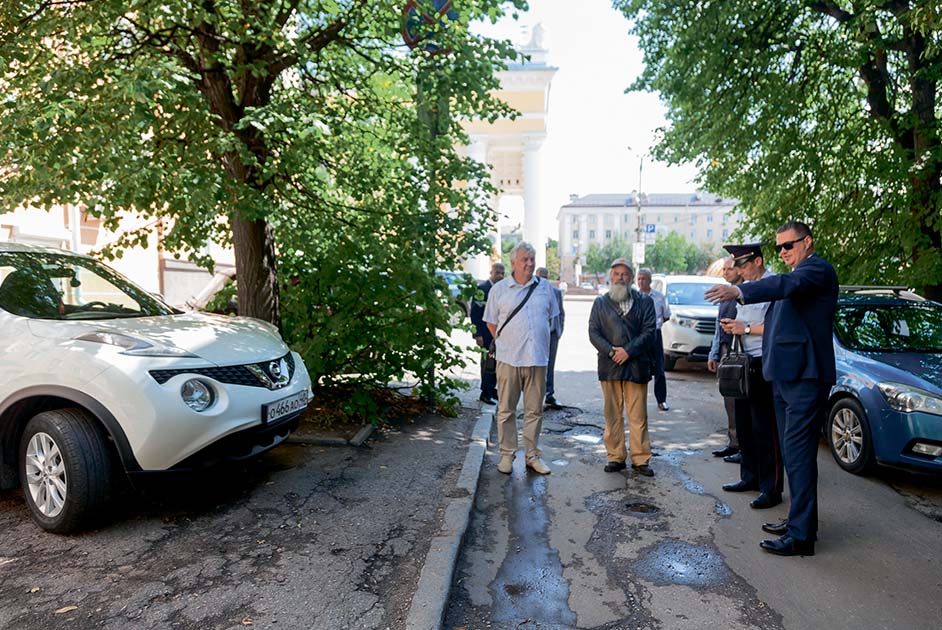
As part of the Civic Chamber's social project "Lawmobile" ("Pravomobil"), its members, together with lawyers and government representatives, organize mobile legal clinics for SMO participants and their families, providing them with qualified legal assistance on-site.
The Civic Chamber, in collaboration with the Committee, also launched a dedicated hotline and a unified federal Telegram chat for medical and psychological support titled "CFWF. Talk to a Psychologist." On average, the hotline and the chat received about 50 inquiries daily on a variety of matters. Project staff provided assistance to applicants even when the reason for contact was not a psychological issue but rather a material problem requiring qualified legal or administrative support.
The objectives of this project, implemented via the Telegram chat for medical psychological support, extended beyond offering a unified communication channel with qualified psychologists. It also aimed to involve family members of SMO participants in various activities focused on joint leisure, recreation, promoting family, spiritual, moral, and cultural values, and organizing joint socially significant initiatives with the support of the Committee's regional headquarters.
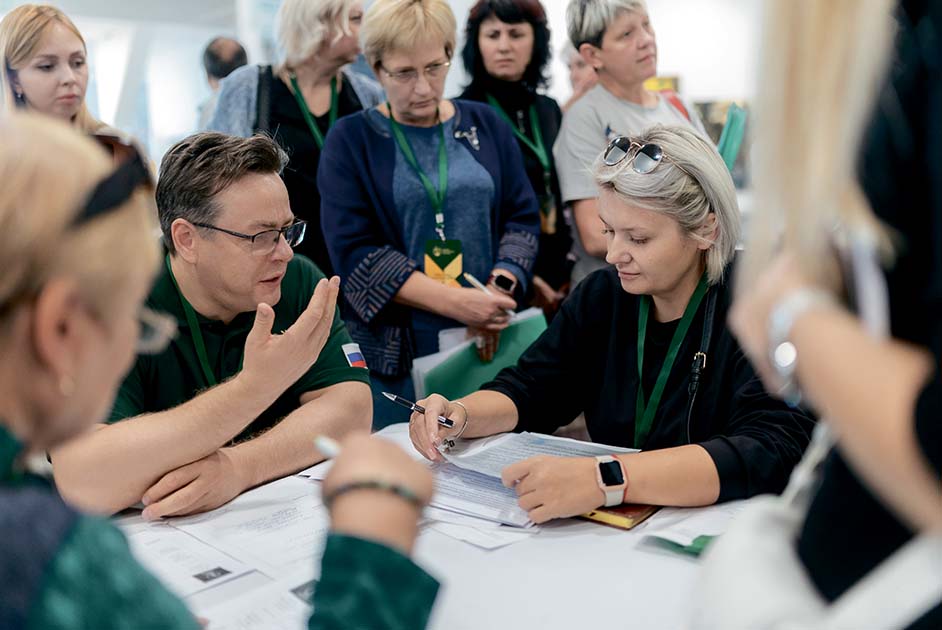 The Civic Chamber of the Russian Federation implements projects aimed at providing support to the families of participants in the Special Military Operation. Among the Civic Chamber's initiatives is the project "Legal Assistance to Participants of the SMO and Their Families," led by Civic Chamber member Alexander Ternovtsov / Committee of Families of Warriors of the Fatherland.
Development of New Regional Support Measures for Large Families
In 2024, the Civic Chamber conducted a series of events to implement the President of Russia's Decree on social support measures for large families in the regions. Following the discussions, recommendations were submitted to the Government of Russia to incentivize regions that have introduced all support measures for large families without applying a means-testing criterion. Proposals formulated in the Civic Chamber's special reports "Demography 2030. How to Ensure Sustainable Population Growth in the Russian Federation" and "Family and Children in Russia" were incorporated into the new national project "Family" for implementation in constituent entities of the Russian Federation with unfavorable demographic situations.
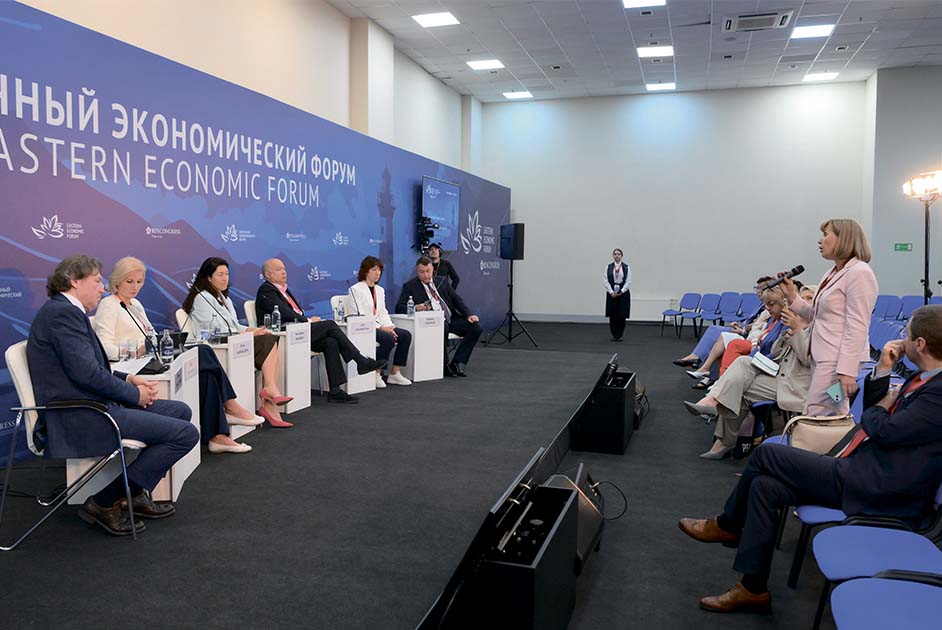 Civic Chamber member Sergey Rybalchenko moderates the session "The Far East is a Family Affair" at EEF-2024. September 6, 2024. Ekaterina Chesnokova / RIA Novosti
Scaling Up Public Oversight Practices
Public inspections are a key tool for monitoring compliance with legislation, allowing for the identification of both problem areas and best practices for subsequent implementation. In the eighth composition of the Civic Chamber, this work was significantly expanded: since mid-2023, 63 public inspections have been conducted across various spheres of public life.
In 2024, inspections were carried out within the framework of the "Community" forums and covered street sports infrastructure facilities in Irkutsk, Kaluga, and Magas, as well as road infrastructure in Tula, Smolensk, Tver, and Voronezh.
Furthermore, in collaboration with civic chambers of the constituent entities of the Russian Federation, a large-scale inspection of medical-psychological counseling offices in medical institutions was conducted, including an assessment of equipment against approved standards. In total, over 230 institutions across 36 constituent entities of the Russian Federation were covered by the inspection.
To systematize the practice and enhance its effectiveness, the Civic Chamber developed methodological recommendations for implementing public oversight in the healthcare sphere through the format of inspections. These recommendations helped standardize approaches and increase the transparency and effectiveness of monitoring.
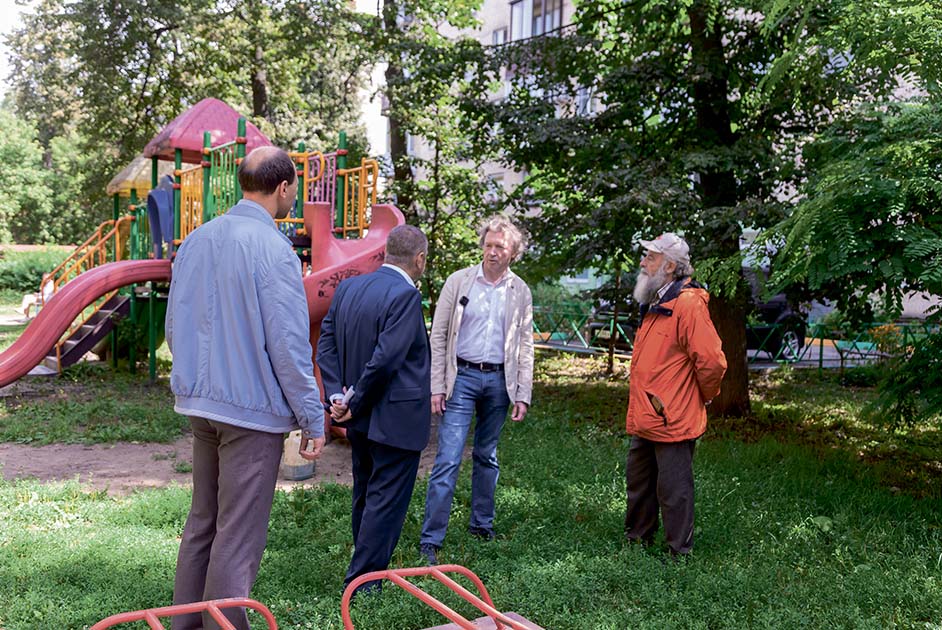
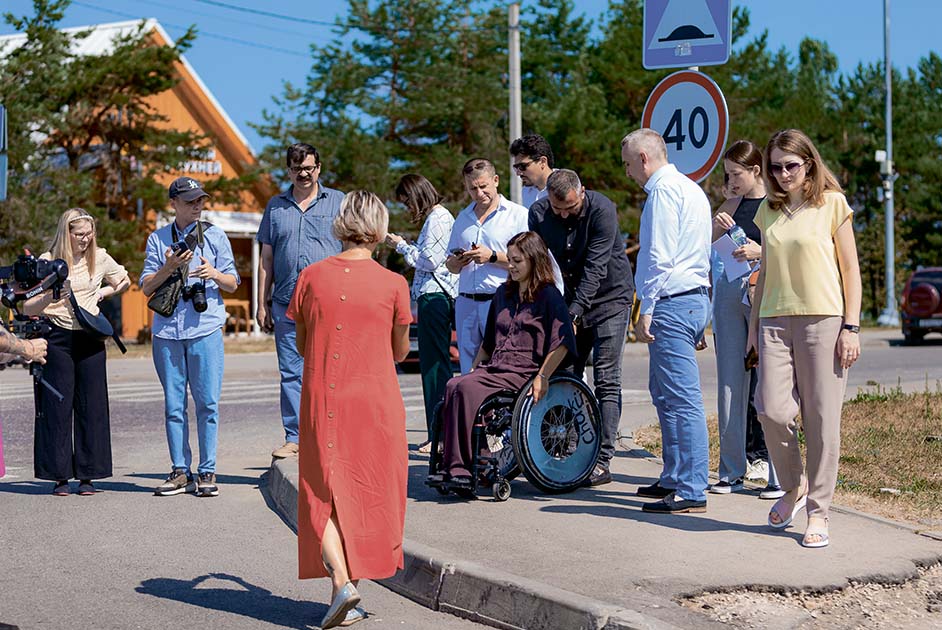 Members of the Civic Chamber conduct public inspections in the spheres of road safety, accessibility, and playground equipment as part of the "Community" forums. 2024 / Press Service of the Civic Chamber of the Russian Federation
BRICS Civil Forum
In July 2024, the IX BRICS Civil Forum was held in Moscow with the participation of the Civic Chamber.
It brought together over 450 representatives of civil society from more than 20 countries—both current members of the association and potential participants. Over two days, expert sessions discussed the goals and principles of fair development and an equitable world order, issues of sovereign economic and financial development, education, healthcare, ethics of new technologies, human well-being, and other relevant topics.
The outcome of the discussions was a set of proposals for BRICS agenda priorities, as well as a number of civil initiatives within this agenda. Members of the Civic Chamber participated in their discussion and development. These recommendations were reflected in the final declaration of the XVI BRICS Summit, held on October 22–24, 2024, in Kazan.
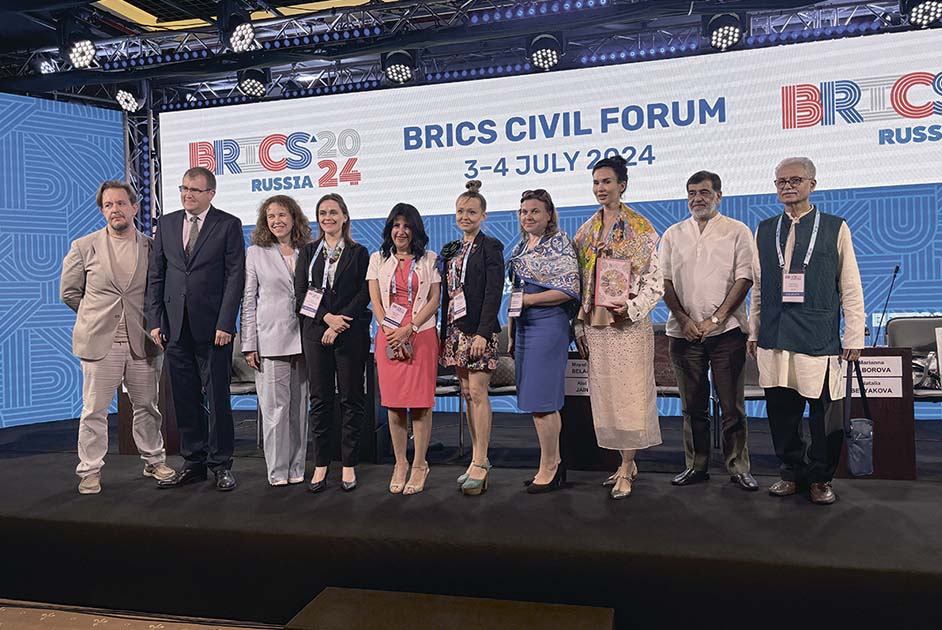 Members of the Civic Chamber of Russia with representatives of foreign delegations at the session "Cultural Bridges of the BRICS Countries," held as part of the "Culture, Sports, Tourism" Working Group of the BRICS Civil Forum. July 4, 2024 / Press Service of the Civic Chamber of the Russian Federation
Presidential Elections in Russia
The election of the President of the Russian Federation was the main event of 2024. With the support of regional civic chambers and relying on accumulated experience in the field of public observation, the Civic Chamber launched comprehensive preparatory work. The methodological foundations of public observation were updated, an enhanced "Golden Standard" was introduced, and the training of an observer corps numbering over 150,000 people was organized. For effective observer training, the Civic Chamber signed agreements with leading political parties and major public organizations.
Extensive work was also carried out to modernize the Civic Chamber's IT infrastructure to counter hacker attacks from abroad, and the information environment for interaction with public observers at polling stations was updated: new features were added to the "Public Observer" application and web interface, support was enhanced, and new interaction tools based on artificial intelligence were implemented. Now an observer could not only independently fill out the "Golden Standard" but also create a news feed from the polling station, upload photo and video materials, and contact the operational mobile group of the regional headquarters. The work done allowed for the formation of a full-fledged public observation ecosystem in the country.
From March 14 to 18, a Situation Center was deployed on the Civic Chamber's premises. For the first time, the "SIC," as it is commonly called by civil society activists, also operated as a live broadcast studio, where experts and observers, representatives of authorities and the media, and opinion leaders provided reliable and objective information about the voting process around the clock and held discussions on the capabilities of civil society in the sphere of public oversight.
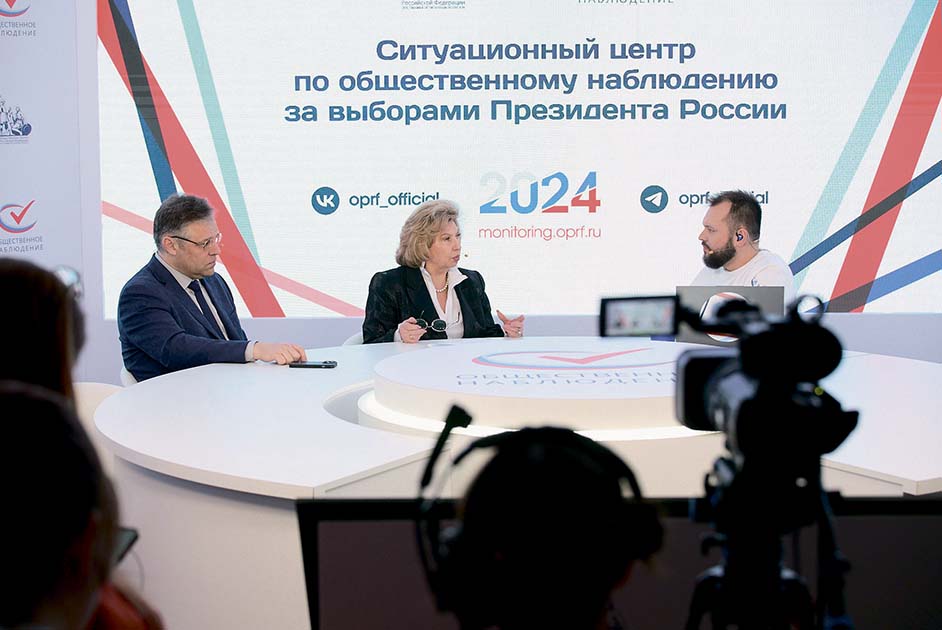 Tatyana Moskalkova and Rodion Miroshnik in the live broadcast studio of the Situation Center. March 17, 2024 / Press Service of the Civic Chamber of the Russian Federation
The Center was visited by foreign delegations, representatives of political parties, and hundreds of citizens, as the center provided an access point to video surveillance of polling stations. Additionally, center staff and volunteers conducted seminars and workshops for anyone wishing to become independent public observers.
Remote electronic voting was monitored for the first time with the involvement of students from technical universities. This ensured complete coverage, reaching all 38 million citizens eligible for this form of voting. The Civic Chamber, together with the Central Election Commission, guaranteed the security of remote electronic voting results by performing daily backups of the database.
Impressive work was also done by the call center volunteers. Collecting information from polling stations about compliance with the "Golden Standard," 250 volunteers spent over 6,000 man-hours and conducted more than 25,000 communications with observers.
It is important to emphasize that the elections proceeded with a minimal number of violations. The vast majority of reports of violations were unsubstantiated. The hotline received 828 inquiries, including 508 reports of violations, of which only 7 were confirmed and addressed.
At the final briefing on March 18, members of the Civic Chamber noted the record voter turnout in the elections, which, together with the voting results, indicated the consolidation of citizens around the country's President.
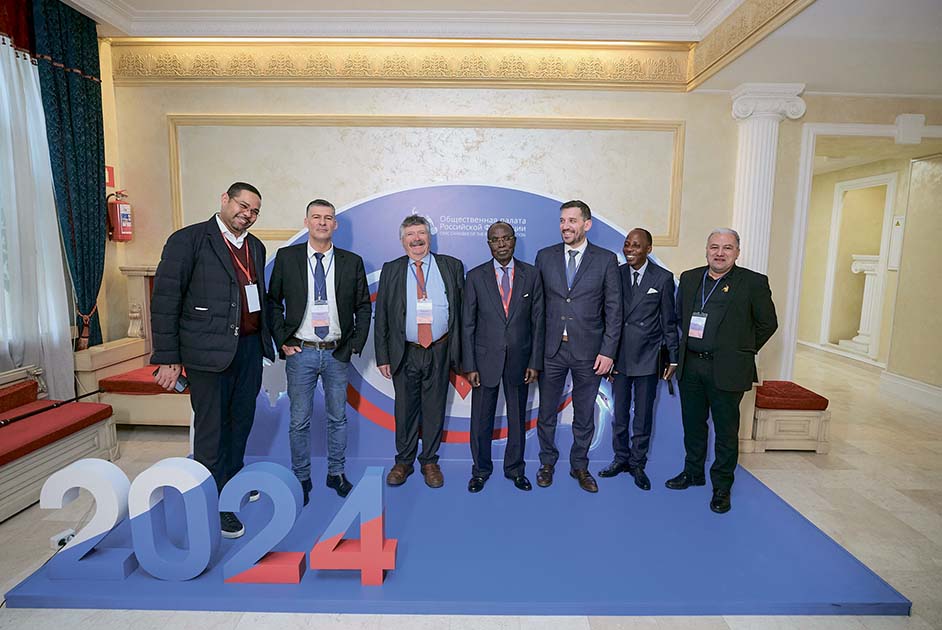 Foreign delegations during a visit to the Situation Center. March 15–17, 2024 / Press Service of the Civic Chamber of the Russian Federation